


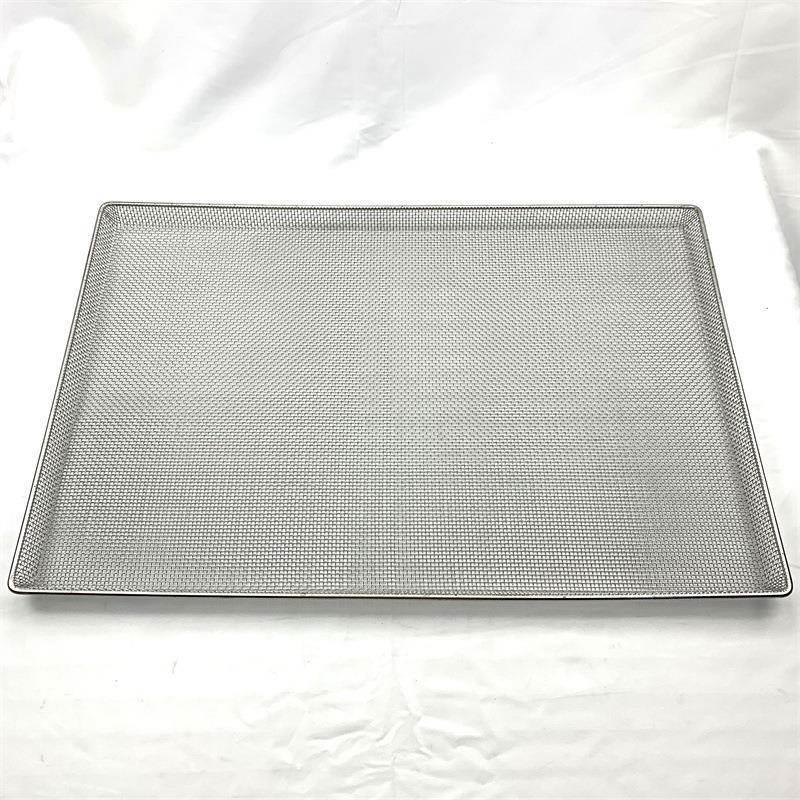
Wire Mesh Dehydrator Tray: A Comprehensive Guide for Industrial Buyers
Product Introduction
For industrial buyers, a wire mesh dehydrator tray is not merely a simple accessory but a fundamental element in continuous production environments where hygiene, load stability, and operational reliability are non-negotiable. These trays are engineered to hold and transport products through drying, cooling, or freezing tunnels, ensuring uniform airflow and consistent dehydration. Sourced by food processing plants, pharmaceutical manufacturers, and industrial bakeries, they address critical production challenges such as maintaining product integrity during high-temperature cycles, resisting corrosive cleaning agents, and withstanding repeated handling. Without a robust tray, operations face product loss, equipment downtime, and compromised safety standards. Therefore, selecting the right wire mesh dehydrator tray is a strategic procurement decision that impacts the entire supply chain.
Product Features and Engineering Advantages
Our wire mesh dehydrator trays are designed with a reinforced frame that significantly improves load stability during repeated transportation and high-frequency industrial handling. The mesh is securely welded at each intersection, preventing wire displacement and ensuring consistent aperture size, which is crucial for uniform drying. The open mesh design maximizes airflow, reducing drying time and energy consumption. Additionally, the trays feature smooth, burr-free surfaces to facilitate easy cleaning and prevent product contamination. Constructed from high-grade stainless steel, they offer excellent corrosion resistance and can endure rigorous washdown procedures. These engineering details translate into tangible benefits: extended service life, reduced maintenance costs, and enhanced product quality.
Application Scenarios
In food processing, wire mesh dehydrator trays are indispensable for drying fruits, vegetables, and meats, where hygiene and uniform airflow are paramount. Bakeries rely on them for proofing and baking, benefiting from even heat distribution. Industrial manufacturing uses these trays for parts drying and coating processes. In pharmaceutical and laboratory settings, they provide sterile, contamination-free platforms for drying and storage. For commercial production of snacks and pet food, trays ensure consistent dehydration. Each application demands trays that can withstand specific conditions—whether high temperatures, corrosive environments, or heavy loads—making the correct selection vital for operational success.
Material Options and Manufacturing Details
We offer a range of materials to suit diverse industrial needs. 304 stainless steel provides reliable corrosion resistance for food contact applications and daily industrial cleaning environments, making it the most common choice. 316 stainless steel offers superior resistance to chlorides and acids, ideal for pharmaceutical and chemical processing. 201 stainless steel is a cost-effective option for dry environments with minimal corrosive exposure. Aluminum trays are lightweight and offer good thermal conductivity but are less suitable for aggressive washdowns. Each material is carefully selected based on the operating environment, required lifespan, and budget. Our manufacturing process includes precision welding, frame reinforcement, and surface passivation to ensure optimal performance and longevity.
Specifications and Technical Parameters
While standard sizes exist, we understand that each production line is unique. Therefore, our trays are available in customizable dimensions to fit specific equipment. Key specifications to consider include tray size (length x width), wire diameter (typically 1.5mm to 4mm), mesh opening (ranging from 2mm to 20mm), and load capacity (up to 50kg per tray depending on design). We also offer various surface treatments such as electrolytic polishing for enhanced cleanliness. Production tolerances are maintained within ±1mm to ensure compatibility with automated handling systems. For precise requirements, our engineering team can provide detailed drawings and recommendations.
Custom OEM Manufacturing Service
As an experienced OEM manufacturer, we provide comprehensive customization services to meet your exact specifications. From custom sizes and designs to logo marking and special packaging, we handle every aspect. Our team can assist with material selection, prototype development, and bulk production, ensuring a seamless transition from concept to delivery. We understand the importance of brand identity and offer discreet labeling options. For custom requirements, please contact our team to discuss your project and receive a tailored quotation.
Purchasing Guide for Industrial Buyers
When sourcing wire mesh dehydrator trays, consider the following list of critical factors to ensure you make an informed decision:
- Confirm the working environment: temperature range, humidity, and chemical exposure.
- Check material requirements: stainless steel grade and surface finish.
- Verify equipment compatibility: dimensions, load capacity, and handling features.
- Evaluate supplier production capacity: lead times, quality control, and export experience.
- Review packaging and delivery reliability to avoid disruptions.
Additionally, request samples for performance testing and always clarify warranty terms. A reputable supplier will provide detailed specifications and certification to support your quality assurance process.
Frequently Asked Questions (FAQ)
Q1: What stainless steel grade is recommended for food processing applications?
A1: For most food processing applications, 304 stainless steel is recommended due to its excellent corrosion resistance and compliance with food safety regulations. For highly acidic or salty products, 316 stainless steel offers superior protection.
Q2: Can the tray size be customized?
A2: Yes, we specialize in custom manufacturing. Provide us with your required dimensions, and we will engineer trays to fit your equipment precisely.
Q3: Do you provide OEM manufacturing service?
A3: Absolutely. We offer full OEM services including custom design, logo marking, and private labeling to meet your brand requirements.
Q4: What information should buyers provide before quotation?
A4: Please provide tray dimensions, material grade, wire diameter, mesh opening, quantity, and any special requirements such as surface treatment or packaging.
Q5: How do you control product quality?
A5: We implement strict quality control at every stage, from raw material inspection to final dimension checks and surface finish verification. We also offer third-party inspection reports upon request.
Q6: What is the typical lead time for bulk orders?
A6: Lead time varies based on order quantity and customization. Generally, it ranges from 4 to 8 weeks after order confirmation. We will provide a precise schedule upon quotation.
Q7: Are the trays suitable for high-temperature drying?
A7: Yes, our stainless steel trays are designed to withstand temperatures up to 800°C (depending on material grade), making them suitable for most industrial drying processes.
Q8: Do you offer samples for testing?
A8: We can provide samples for evaluation. Please contact our sales team to discuss sample availability and costs.

