


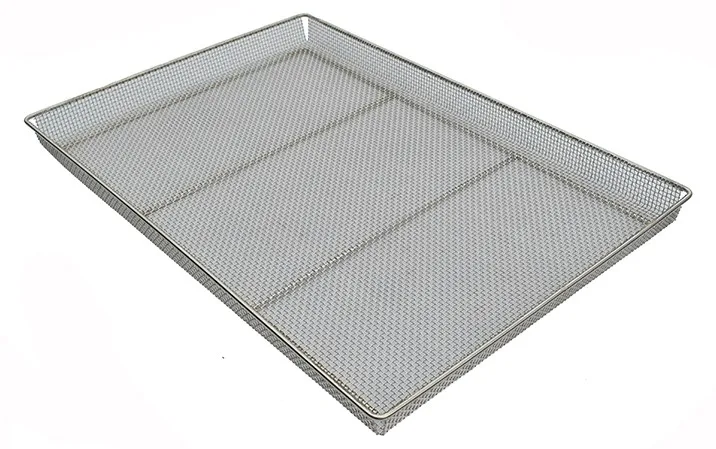
Stainless Steel Baking Tray Sourcing Guide for Industrial Buyers: Engineering, Materials, and Supplier Qualification
Product Introduction
In industrial procurement, a stainless steel baking tray is rarely just a pan. It is a production asset that moves through ovens, proofers, coolers, wash lines, and transport racks—often several times per shift. For importers, distributors, and OEM buyers serving food processing plants, commercial bakeries, pharmaceutical production, and general manufacturing, the tray must perform under continuous operation where hygiene, load stability, and dimensional consistency are critical.
This guide is written for B2B buyers who need to qualify a stainless steel baking tray supplier, confirm material and tolerances, and avoid the costly mistakes that appear only after containers arrive. We will cover engineering features, application scenarios, material options, specifications, OEM manufacturing, and a purchasing framework you can use in supplier audits and RFQs.
Typical industrial use cases include blast freezing, high-temperature baking, drying, cooling, and wash-down environments. In these settings, a tray that warps, traps moisture, or fails to fit existing rack systems creates downtime and rework. Procurement teams therefore need to evaluate not only price per unit but total cost of ownership—including cleaning time, replacement frequency, and compatibility with automated handling equipment.
Product Features and Engineering Advantages
Industrial trays are engineered around three variables: load, heat, and handling. A tray that performs well in a static oven may fail in a rack-and-transport system where repeated loading and unloading introduce mechanical stress. The following features are typically specified by experienced buyers:
- High corrosion resistance suitable for food contact and daily wash-down
- Easy-cleaning surface with radiused corners and minimal crevice areas
- Stable load capacity across repeated transport and stacking
- Custom manufacturing options for rack compatibility and line integration
The reinforced frame design improves load stability during repeated transportation and high-frequency industrial handling. Look for fully welded or double-folded edges; these reduce flexing and prevent the tray from spreading under load. In high-temperature baking applications, controlled stress relief during forming helps minimize warpage across production cycles.
Surface finish also matters. A uniform, passivated surface supports hygiene programs and reduces product adhesion. For buyers, the practical test is not a single tray on a bench—it is how a pallet of trays performs after 200 wash cycles. Request test data or sample trays from the production line, not from a showroom batch. Engineering companies and food processing buyers should also confirm dimensional tolerance statements in writing, because rack compatibility is often the difference between a smooth installation and a line stoppage.
Application Scenarios
Different industries impose different demands on a stainless steel baking tray. The same tray specification rarely fits all applications, which is why experienced buyers segment their requirements before requesting quotations.
Food processing. Trays are used for baking, cooling, freezing, and transporting products through hygienic zones. Stainless steel is preferred because it withstands caustic cleaning agents and does not harbor bacteria when fabricated with smooth welds and radiused corners.
Bakery and commercial production. Here, trays must handle high temperatures, frequent handling, and stacking. Buyers often specify reinforced frames and consistent flatness to prevent tipping in automated rack systems.
Industrial manufacturing. Parts washing, drying, and coating lines use trays as carriers. Chemical resistance and load capacity are the primary concerns, and mesh or perforated designs may be required for drainage.
Drying process. A stainless steel drying tray is common in food dehydration and chemical drying, where airflow and drainage are critical. Perforated or mesh configurations improve air circulation and reduce drying time.
Cleaning process. Trays used in wash-down environments must tolerate detergents, sanitizers, and high-pressure sprays. Material grade and weld quality directly affect service life.
Storage and transportation. Trays function as returnable containers in internal logistics. Stackability, weight, and compatibility with existing racking are key procurement criteria.
Pharmaceutical and laboratory. Cleanability and material traceability are essential. Buyers may require material certificates and documented surface finishes.
Material Options and Manufacturing Details
Material selection is one of the most consequential decisions in tray procurement. The grade affects corrosion resistance, cost, and suitability for the working environment.
304 stainless steel provides reliable corrosion resistance for food contact applications and daily industrial cleaning environments. It is the most common choice for bakery, food processing, and general manufacturing trays. 316 stainless steel offers higher resistance to chlorides and aggressive chemical environments, making it suitable for pharmaceutical production, laboratory use, and some food processing facilities with heavy sanitizer exposure. It carries a higher material cost but can reduce replacement frequency in corrosive settings.
201 stainless steel is a lower-cost option with reduced corrosion resistance. It may be appropriate for dry storage or light-duty applications where moisture and chemicals are limited, but buyers should verify suitability for wash-down or food contact environments. Aluminum trays offer weight advantages and good thermal conductivity, but they are not equivalent to stainless steel in corrosion resistance or durability under aggressive cleaning.
Manufacturing details also influence performance. Buyers should confirm welding method, edge treatment, surface finish, and whether the supplier performs in-house forming and finishing. A supplier that controls these processes can hold tolerances and respond to custom requirements more reliably than a trading company sourcing from multiple workshops.
Specifications and Technical Parameters
Procurement specifications should be written around the actual production environment, not a generic catalog page. The following parameters are typically reviewed:
- Size: Length, width, and height; available sizes can be customized according to equipment dimensions and production requirements.
- Thickness: Commonly 0.8 mm to 2.0 mm depending on load and handling.
- Capacity and weight loading: Static load and dynamic load ratings should be confirmed for stacked and transported use.
- Layers and rack compatibility: Confirm tray pitch, runner spacing, and stack height with existing equipment.
- Mesh opening and wire diameter: Relevant for perforated or mesh trays; airflow and drainage requirements drive the choice.
- Surface treatment: Passivation, polishing, or pickling as required by the hygiene program.
- Production tolerance: Dimensional tolerances should be stated in writing and verified on sample batches.
For buyers integrating trays into automated lines, request a drawing review before production. Small deviations in corner radius or edge height can cause jams in rack systems. Where specific parameters are not fixed, use industry-typical ranges and require the supplier to confirm capability in the quotation.
Custom OEM Manufacturing Service
Many industrial buyers require more than a catalog item. A qualified OEM stainless steel tray manufacturer should support custom size, custom design, logo marking, special packaging, material selection, prototype development, and bulk production. This matters for distributors building private-label programs and for engineering companies specifying trays for new production lines.
Prototype development is particularly useful for validating fit and load performance before committing to volume. A supplier with in-house tooling and forming capability can typically move from drawing to sample faster and with fewer revisions. Packaging is also an OEM consideration: export buyers often require palletized, corner-protected packaging to prevent deformation during ocean freight.
For custom requirements, please contact our team with drawings, application details, and estimated volumes. Clear inputs at the RFQ stage reduce lead time and prevent specification mismatches later.
Purchasing Guide for Industrial Buyers
Buying trays at scale requires a structured evaluation. The following checklist reflects common procurement practice:
- Confirm working environment: temperature range, moisture, cleaning chemicals, and load conditions
- Check material requirements: grade, certificate needs, and food-contact or pharmaceutical standards
- Verify equipment compatibility: rack dimensions, stack height, and handling method
- Evaluate supplier production capacity: in-house forming, welding, finishing, and quality control
- Review export experience and packaging: documentation, palletization, and damage prevention
- Confirm delivery reliability: lead times, production scheduling, and communication process
When comparing quotations, separate material cost from processing cost. A low unit price may reflect thinner material, fewer welds, or outsourced finishing—factors that affect service life. Request material certificates, dimensional inspection reports, and references from comparable export markets. For repeat orders, agree on an inspection standard and sampling plan before the first shipment.
FAQ
What stainless steel grade is recommended for food processing applications?
304 stainless steel is the standard choice for most food processing trays because it provides reliable corrosion resistance and cleanability. For facilities with high chloride exposure or aggressive sanitizers, 316 stainless steel may be specified. Buyers should confirm the grade with their hygiene and engineering teams and request material certificates with each shipment.
Can the tray size be customized?
Yes. Custom sizes are common for industrial buyers integrating trays with existing ovens, racks, and automated handling systems. Provide drawings or measured dimensions, including corner details and edge height, so the supplier can confirm tooling and tolerance capability before quoting.
Do you provide OEM manufacturing service?
OEM service typically includes custom design, logo marking, material selection, special packaging, and private-label production. Buyers should clarify tooling ownership, sample approval steps, and minimum order quantities at the RFQ stage to avoid delays during production ramp-up.
What information should buyers provide before quotation?
Provide tray dimensions, material grade, thickness, load requirements, operating temperature, cleaning method, rack compatibility details, surface finish, packaging requirements, and estimated annual volume. Drawings and photos of the current tray or receiving equipment help suppliers identify potential fit issues early.
How do you control product quality?
Quality control should cover incoming material verification, in-process dimensional checks, weld inspection, surface finish review, and final inspection before packing. Ask for the inspection plan, sampling method, and documentation provided with each shipment. For critical applications, request a pre-production sample and first-article inspection report.
What is the typical lead time for bulk orders?
Lead time depends on customization, material availability, and order volume. Standard trays may ship in a few weeks, while custom designs with new tooling require additional sample approval time. Confirm production scheduling and shipping terms in the contract, and allow buffer time for ocean freight and customs clearance.

