


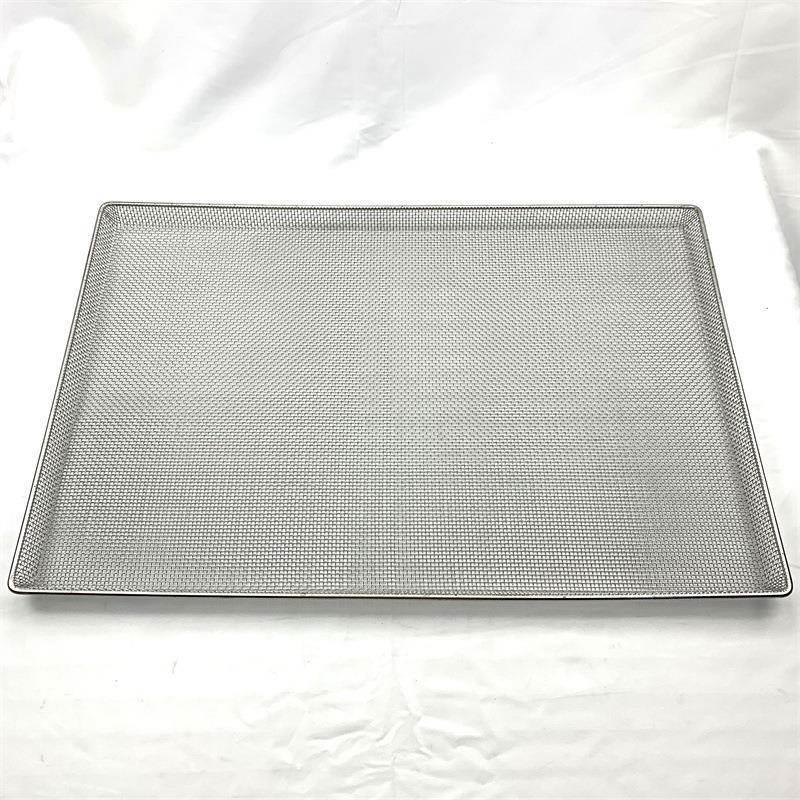
Stainless Steel Baking Tray Procurement: A Comprehensive Guide for Industrial Buyers
Product Introduction: The Backbone of Industrial Baking Operations
In the realm of industrial food processing and manufacturing, the stainless steel baking tray serves as a fundamental asset. Unlike consumer-grade products, industrial baking trays are subjected to continuous, high-stress cycles involving extreme temperatures, heavy loads, and rigorous sanitation protocols. These trays are engineered to facilitate the seamless movement of goods through automated production lines, from proofing and baking to cooling and packaging. For procurement managers, selecting the correct tray is a strategic decision that impacts product quality, line efficiency, and long-term operational costs. A well-specified tray ensures uniform heat distribution, minimizes product waste due to deformation, and withstands the corrosive effects of frequent chemical cleaning. In a market where downtime is costly, investing in robust, industrial-grade stainless steel trays is essential for maintaining a competitive edge in food production and other manufacturing sectors.
Product Features and Engineering Advantages
The engineering behind industrial stainless steel baking trays focuses on durability and performance under duress. A critical feature is the reinforced frame and corner design, which prevents twisting and warping during high-temperature baking cycles or heavy loading. The use of advanced TIG welding and robotic seam welding ensures structural integrity, eliminating weak points that could harbor bacteria or fail under stress. Furthermore, the surface finish is a key engineering consideration; a 2B or BA surface finish not only facilitates easy release of baked goods but also enhances corrosion resistance by minimizing surface imperfections where contaminants could accumulate. These trays are designed for stackability and compatibility with standard racking systems, optimizing space utilization in high-density storage and transport scenarios. The engineering advantages translate directly into reduced maintenance costs, longer service life, and consistent product output, which are vital metrics for any industrial operation.
- High corrosion resistance for longevity in humid and chemical-rich environments.
- Easy-cleaning surface to meet strict hygiene standards.
- Stable load capacity to prevent sagging under heavy dough or product loads.
- Custom manufacturing options to fit specific rack and oven dimensions.
Application Scenarios Across Industries
The versatility of stainless steel baking trays extends far beyond traditional bakeries. In food processing plants, these trays are integral to automated lines for freezing, drying, and cooling. For industrial manufacturing, they serve as durable carriers for components undergoing heat treatment or chemical washing. The pharmaceutical and laboratory sectors rely on the non-reactive and sterile nature of stainless steel for drying and storing sensitive materials. In commercial production environments, such as large-scale catering facilities, trays are used for high-volume roasting and storage. Each application demands specific tray characteristics; for instance, a tray used in a blast freezer must maintain structural integrity at sub-zero temperatures, while a tray in a dehydrator must offer optimal airflow through its mesh or perforated design. Understanding these diverse scenarios is crucial for procurement professionals to specify the right tray for the right job, ensuring operational efficiency and compliance with industry regulations.
Material Options and Manufacturing Details
The selection of material grade is a primary determinant of cost and performance. 304 stainless steel is the industry workhorse, providing reliable corrosion resistance for food contact applications and daily industrial cleaning environments. For more aggressive environments involving saline solutions or strong acids, 316 stainless steel is recommended due to its superior resistance to pitting and crevice corrosion. 201 stainless steel offers a cost-effective alternative for applications with lower corrosion demands, such as dry storage or general manufacturing, though it may be less suitable for frequent wet cleaning. Aluminum trays, while lightweight and excellent heat conductors, are susceptible to corrosion and are generally not recommended for direct food contact without a coating. The manufacturing process, whether involving deep drawing, welding, or perforation, must be tightly controlled to ensure consistent quality. Surface treatments like electropolishing can further enhance corrosion resistance and cleanability, making the tray suitable for the most stringent hygiene standards.
Specifications and Technical Parameters
Procurement specifications should be based on the specific requirements of the production line. Key parameters include size (length x width x height), which must be compatible with existing ovens, racks, and conveyor systems. Thickness typically ranges from 0.8mm to 1.5mm, with thicker gauges offering greater load-bearing capacity and resistance to warping. Mesh opening and wire diameter are critical for airflow and product support in drying and cooling applications. Load capacity, often expressed in kg per tray or per rack layer, must be clearly defined to prevent structural failure. Surface treatment and production tolerance are also vital; precision manufacturing ensures that trays fit seamlessly into automated systems, reducing jams and downtime. Buyers should request detailed drawings and material certificates to verify compliance with international standards such as ASTM or EN.
Custom OEM Manufacturing Service
For unique production requirements, a reliable OEM stainless steel tray manufacturer can provide tailored solutions. This includes custom sizes to fit non-standard equipment, custom designs with specific perforation patterns or reinforced edges, and logo marking for brand identification or asset tracking. Special packaging options, such as individual wrapping or bulk crating, are available to suit different logistics needs. The material selection process is collaborative, ensuring the right grade is chosen for the application. Prototype development allows buyers to test designs before committing to bulk production, mitigating risks. For custom requirements, please contact our team to discuss your project specifications and receive a detailed proposal.
Purchasing Guide for Industrial Buyers
Effective procurement of stainless steel baking trays requires a systematic approach. First, confirm the working environment to determine the necessary corrosion resistance and temperature tolerance. Next, check material requirements against industry standards and product contact regulations. Verify equipment compatibility by providing exact dimensions and load expectations to the supplier. When evaluating suppliers, assess their production capacity through factory audits or video tours, and review their quality control processes, including material traceability and finished product testing. For bulk purchases, consider the supplier's export experience and packaging standards to ensure goods arrive undamaged. A comprehensive list of procurement considerations includes:
- Confirm working environment and temperature range.
- Check material requirements and certifications.
- Verify equipment compatibility and load capacity.
- Evaluate supplier production capacity and quality control.
- Review packaging and delivery reliability.
FAQ
Q1: What stainless steel grade is recommended for food processing applications?
For most food processing applications, 304 stainless steel is recommended due to its excellent corrosion resistance and food-safe properties. For environments with high salinity or acidic exposure, 316 stainless steel offers superior protection. Always verify that the material meets relevant food contact regulations.
Q2: Can the tray size be customized?
Yes, custom sizes are a standard offering from OEM manufacturers. Provide detailed dimensions, including length, width, height, and any corner radii, to ensure a perfect fit for your equipment. Prototypes can be developed for verification before mass production.
Q3: Do you provide OEM manufacturing service?
Absolutely. We offer full OEM services, including custom designs, material selection, logo marking, and special packaging. Our engineering team works closely with buyers to develop trays that meet specific operational requirements and branding needs.
Q4: What information should buyers provide before quotation?
Buyers should provide tray dimensions, material grade, surface finish, load capacity, quantity, and any special requirements such as perforation patterns or welding standards. Application details, including temperature and cleaning methods, help us recommend the most suitable specification.
Q5: How do you control product quality?
We implement strict quality control at every stage, from incoming material inspection to in-process checks and final dimensional and surface quality tests. Material certificates and inspection reports are provided with each shipment to ensure compliance and traceability.

