


Industrial Wire Mesh Tray Procurement: A Buyer’s Guide to Durable, Food-Safe Stainless Steel Solutions
Product Introduction
In industrial production environments, an industrial wire mesh tray is far more than a simple container—it is a critical component that directly affects workflow efficiency, product hygiene, and operational safety. Designed for continuous use in demanding settings such as food processing plants, bakeries, pharmaceutical facilities, and manufacturing lines, these trays facilitate drying, cooling, storage, and transportation of goods. They solve key production challenges by providing excellent air circulation, rapid drainage, and stable load support, which are essential for maintaining product quality and minimizing downtime. For procurement professionals, sourcing the right tray means balancing durability, cleanability, and compatibility with existing equipment. Whether you are an importer, distributor, or an engineering company specifying equipment for a new facility, understanding the engineering and material aspects of industrial wire mesh trays is essential to avoid costly replacements and production bottlenecks.
Product Features and Engineering Advantages
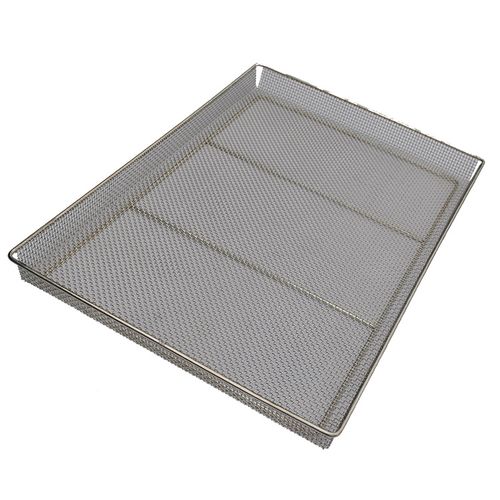
Industrial wire mesh trays are engineered for reliability and longevity. The construction typically involves a sturdy frame, often reinforced with cross-bracing, and a mesh surface made from wire strands welded at intersections. This design offers several key advantages:
- High corrosion resistance: Using appropriate stainless steel grades ensures resistance to moisture, chemicals, and cleaning agents, extending service life.
- Easy cleaning surface: The open mesh design prevents debris accumulation and allows thorough cleaning, meeting strict hygiene standards.
- Stable load capacity: Reinforced frames and precise welding distribute weight evenly, preventing deformation under heavy loads.
- Custom manufacturing options: Trays can be tailored in size, mesh opening, wire diameter, and load rating to fit specific equipment and processes.
The manufacturing process involves automated welding for consistent joint strength, followed by surface treatment such as passivation or polishing to enhance corrosion resistance. These features make the trays suitable for high-frequency handling, repeated washing, and exposure to harsh industrial environments.
Application Scenarios
Industrial wire mesh trays are versatile and find use across multiple sectors:
- Food processing: Used for drying, cooling, blanching, and freezing. The open mesh allows uniform air flow and rapid drainage, crucial for maintaining food safety and quality.
- Bakery: Ideal for cooling baked goods, proofing dough, and storing ingredients. Mesh design prevents condensation and ensures even cooling.
- Industrial manufacturing: Employed for parts washing, drying, and assembly line transport. Trays can be customized to fit automated handling systems.
- Drying process: In chemical and pharmaceutical industries, mesh trays facilitate efficient drying of powders, granules, and coated products.
- Cleaning process: Used in parts cleaning and sterilization, where drainage and chemical resistance are critical.
- Storage and transportation: Stackable designs optimize space and protect products during movement within facilities.
- Pharmaceutical and laboratory: Stainless steel mesh trays meet cleanroom requirements and are easy to sterilize.
- Commercial production: From agriculture to electronics, mesh trays provide a durable, hygienic solution for handling small components.
Each application benefits from the tray’s ability to maintain product integrity, improve airflow, and withstand rigorous cleaning cycles, making it a preferred choice for B2B buyers seeking reliable performance.
Material Options and Manufacturing Details
Material selection is a critical decision that impacts performance, lifespan, and cost. Common materials include:
- 304 stainless steel: Provides reliable corrosion resistance for food contact applications and daily industrial cleaning environments. It is suitable for most food processing, bakery, and general manufacturing uses.
- 316 stainless steel: Offers superior corrosion resistance, especially against chlorides and harsh chemicals. Ideal for pharmaceutical, chemical, and marine applications where exposure to aggressive substances is a concern.
- 201 stainless steel: A cost-effective alternative with moderate corrosion resistance, suitable for dry environments or light-duty applications where exposure to moisture is limited.
- Aluminum: Lightweight and corrosion-resistant, often used in applications where weight reduction is important, such as in aerospace or certain food handling scenarios, but may not withstand high-temperature cleaning as well as stainless steel.
Manufacturing details such as wire diameter (typically 1.5mm to 5mm), mesh opening (ranging from 2mm to 50mm), and frame thickness are tailored to the load requirements and process conditions. Surface treatments like electrolytic polishing or sandblasting can further enhance cleanability and appearance. Buyers should specify the material grade based on the operating environment and cleaning protocols to ensure optimal performance and cost-efficiency.
Specifications and Technical Parameters
When specifying industrial wire mesh trays, buyers should consider the following parameters, which can be customized to meet specific needs:
- Size: Length, width, and height can be customized to fit equipment dimensions, such as oven racks, conveyor systems, or shelving units.
- Thickness: Frame and wire thickness impact load capacity; typical wire diameters range from 1.5mm to 5mm, with frames from 1mm to 3mm.
- Capacity/Weight loading: Designed to support loads from a few kilograms up to several hundred kilograms, depending on construction.
- Layers: Single-layer or multi-layer stackable designs are available to maximize storage and processing efficiency.
- Mesh opening: Determines airflow and product containment; common openings are 5mm x 5mm to 25mm x 25mm, with custom options.
- Wire diameter: Affects strength and durability; standard options include 2mm, 3mm, and 4mm.
- Tray compatibility: Can be designed to fit standardized racking systems or specific equipment interfaces.
- Surface treatment: Polished, passivated, or coated to enhance corrosion resistance and cleanability.
- Production tolerance: Typically ±1mm for dimensions, ensuring proper fit and function.
For custom requirements, buyers should provide detailed drawings or specifications to ensure the final product meets operational demands.
Custom OEM Manufacturing Service
For unique production needs, partnering with an experienced OEM manufacturer is essential. A capable supplier offers:
- Custom size and design: Tailored to your equipment and process layout.
- Logo marking: Branding options for identification and marketing.
- Special packaging: Designed for safe transport and storage, often according to export standards.
- Material selection: Guidance on choosing the optimal stainless steel grade or aluminum based on application.
- Prototype development: Rapid prototyping to validate design before bulk production.
- Bulk production: Scalable manufacturing with consistent quality control.
For custom requirements, please contact our team to discuss your specifications and receive a tailored quotation.
Purchasing Guide for Industrial Buyers
Effective procurement of industrial wire mesh trays requires careful consideration of several factors:
- Confirm working environment: Identify exposure to moisture, chemicals, temperature extremes, and cleaning methods to select the right material.
- Check material requirements: Ensure compliance with industry standards (e.g., FDA, EU food contact regulations) and verify material certificates.
- Verify equipment compatibility: Provide accurate dimensions and interface details to avoid fit issues.
- Evaluate supplier production capacity: Assess manufacturing capabilities, quality control processes, and experience with export markets.
- Review packaging and delivery reliability: Confirm packaging meets shipping requirements and supplier has a track record of on-time delivery.
- Request samples: Test samples for load capacity, cleanability, and durability before committing to bulk orders.
Additionally, consider long-term costs: while a lower-priced tray may save initially, inferior materials can lead to frequent replacements and production downtime. A reputable supplier will provide transparent specifications and support throughout the purchasing process.
FAQ
Q1: What stainless steel grade is recommended for food processing applications?
For most food processing, 304 stainless steel is sufficient due to its good corrosion resistance and cleanability. However, if the environment involves chlorides or aggressive cleaning agents, 316 stainless steel is recommended for enhanced durability. Always verify compliance with local food safety regulations.
Q2: Can the tray size be customized?
Yes, tray dimensions can be fully customized to match your equipment, such as oven racks, conveyor systems, or storage shelving. Provide detailed measurements or drawings, and the manufacturer will produce trays to your exact specifications.
Q3: Do you provide OEM manufacturing service?
Absolutely. We offer comprehensive OEM services including custom design, logo marking, special packaging, and material selection. Our engineering team can assist from prototype development to bulk production, ensuring the final product meets your requirements.
Q4: What information should buyers provide before quotation?
Buyers should supply: dimensions (length, width, height), material grade, wire diameter and mesh opening, load capacity, surface treatment, quantity, and any special requirements like branding or packaging. Clear specifications enable accurate and competitive quotations.
Q5: How do you control product quality?
We implement strict quality control at every stage: incoming material inspection, in-process checks during welding and forming, and final inspection for dimensions, surface finish, and load testing. We can provide material certificates and inspection reports upon request.
Q6: What is the typical lead time for bulk orders?
Lead time varies based on order quantity and customization complexity. Standard orders typically ship within 4-6 weeks after order confirmation. For urgent projects, expedited production can be arranged. We recommend discussing timelines early to ensure alignment with your production schedule.
Image ALT Text Suggestion
Industrial wire mesh tray for food processing drying applications manufactured by OEM supplier
SEO Title
Industrial Wire Mesh Tray Procurement Guide | B2B Sourcing
Meta Description
Comprehensive guide for B2B buyers on industrial wire mesh trays: materials, specifications, OEM services, and purchasing tips for food processing and manufacturing.
SEO Keywords
industrial wire mesh tray, stainless steel mesh tray, food processing tray, industrial mesh tray supplier, custom stainless steel tray, OEM stainless steel tray manufacturer, wire mesh tray specifications, bulk wire mesh trays

