


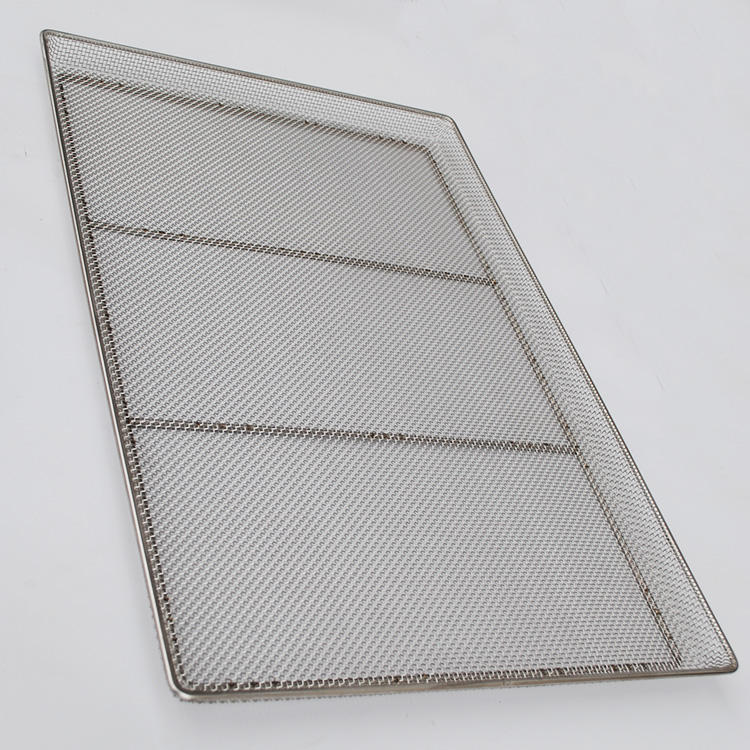
Industrial Wire Mesh Tray: A Strategic Sourcing Guide for B2B Buyers
Product Introduction
An industrial wire mesh tray is not a commodity item; it is a critical component in continuous production environments where hygiene, load stability, and long-term reliability directly impact uptime and product safety. These trays are engineered from welded wire mesh and structural frames to withstand repeated cleaning, high-temperature drying, and rigorous handling. Whether you are an importer stocking for food processing plants, a distributor serving bakeries, or an OEM buyer specifying trays for a pharmaceutical line, understanding the engineering behind the mesh is essential. The core problem these trays solve is the safe, efficient containment and transport of goods through automated processes—from washing and drying to blast freezing and sterilization. For purchasing teams, the wrong specification means premature failure, contamination risks, and production downtime. This is why sourcing from a manufacturer who understands industrial tolerances and material traceability is a strategic decision, not a transactional one.
Product Features and Engineering Advantages
Industrial wire mesh trays are designed for environments where standard plastic or solid metal trays fail. The structural design typically features a reinforced frame—often a thicker wire or formed rod—to improve load stability during repeated transportation and high-frequency industrial handling. The mesh itself is resistance-welded at every intersection, creating a rigid grid that distributes weight evenly and prevents deformation under dynamic loads. Manufacturing processes include automated wire straightening, precision cutting, robotic welding, and post-weld passivation for stainless steel grades. This results in trays with consistent mesh openings, flat surfaces, and smooth edges that prevent product damage and operator injury. Key advantages include:
- High corrosion resistance for washdown and chemical exposure
- Easy cleaning surface with open mesh design that eliminates water pooling and debris traps
- Stable load capacity due to reinforced frame and welded construction
- Custom manufacturing options to fit existing racking, conveyor, or oven systems
- Thermal stability for high-temperature drying and freezing processes
In food processing, the open mesh allows uniform airflow and drainage, which accelerates drying and reduces bacterial growth. In industrial manufacturing, the rigid structure tolerates forklift handling and automated transfer systems without bending. These are not marketing claims; they are the result of engineering decisions that buyers should verify through sample testing and supplier audits.
Application Scenarios
The versatility of industrial wire mesh trays makes them indispensable across multiple sectors, but each application imposes unique requirements. In food processing, trays are used for washing, blanching, cooling, and freezing. The mesh design ensures rapid drainage and airflow, critical for maintaining product quality and meeting HACCP hygiene standards. Bakeries rely on mesh trays for proofing, baking, and cooling; the open structure allows even heat distribution and prevents soggy bottoms. In industrial manufacturing, these trays transport small parts through degreasing, phosphating, and coating lines, where chemical resistance and load stability are paramount. Drying processes in chemical and textile plants benefit from the high open area, which maximizes air contact and reduces drying time. Cleaning processes in pharmaceutical and laboratory settings require trays that can withstand autoclaving and harsh detergents; 316 stainless steel is often specified. Storage and transportation applications use stackable mesh trays to organize components, with reinforced frames for forklift handling. In commercial production and pharmaceutical cleanrooms, non-shedding, easy-to-sanitize trays prevent cross-contamination. Each scenario demands a specific material grade, mesh size, and load rating—buyers must match the tray to the environment, not the other way around.
Material Options and Manufacturing Details
Material selection is the most consequential decision in tray specification, affecting lifespan, hygiene compliance, and total cost of ownership. 304 stainless steel provides reliable corrosion resistance for food contact applications and daily industrial cleaning environments; it is the workhorse grade for most food processing and bakery applications. 316 stainless steel adds molybdenum for superior resistance to chlorides and harsh chemicals, making it suitable for pharmaceutical, marine, and chemical processing environments where 304 would pit or corrode. 201 stainless steel offers a lower-cost option with moderate corrosion resistance, often used in dry storage or light-duty applications where exposure to moisture is limited. Aluminum trays are lightweight and offer good thermal conductivity, ideal for baking and cooling where weight reduction is a priority, but they are not suitable for highly alkaline or acidic washdown. Manufacturing details matter: wire diameter typically ranges from 1.5mm to 6mm, mesh openings from 5mm to 50mm, and frame reinforcement from 4mm to 10mm rod. Surface treatments include passivation for stainless steel (to restore the chromium oxide layer after welding) and anodizing for aluminum. Buyers should request material certificates (Mill Test Reports) and verify weld integrity through destructive or non-destructive testing on samples. A reputable industrial mesh tray supplier will provide these documents as standard, not as an exception.
Specifications and Technical Parameters
While custom manufacturing is the norm, buyers should understand the typical parameter ranges to frame their requests. Size: trays are commonly customized from 300mm x 400mm up to 1200mm x 800mm, with larger sizes available for specific oven or conveyor dimensions. Thickness: wire diameter from 1.5mm to 6mm; frame rod from 4mm to 10mm. Capacity: load ratings from 10kg to 150kg per tray, depending on mesh density and frame design. Weight loading: static loads are higher than dynamic; buyers must specify if trays will be stacked or moved on conveyors. Layers: single-tier or multi-tier stackable designs are available. Mesh opening: from 5mm to 50mm; smaller openings for small components, larger for airflow. Wire diameter: as above, with tolerance typically ±0.1mm. Tray compatibility: trays can be designed to fit existing racking, shelving, or conveyor systems; buyers should provide interface dimensions. Surface treatment: passivation, pickling, or anodizing. Production tolerance: typically ±1mm on overall dimensions, ±0.5mm on mesh opening. For custom requirements, buyers should provide drawings or samples. Available sizes can be customized according to equipment dimensions and production requirements; do not assume a standard size will fit your line.
Custom OEM Manufacturing Service
For buyers seeking a long-term supply partner, OEM manufacturing capability is a key differentiator. A true OEM custom stainless steel tray manufacturer offers more than size modifications. They provide design assistance—reviewing your application and recommending mesh orientation, frame reinforcement, and material grade. They can produce prototypes for fit and function testing before committing to bulk production. Logo marking (laser etching or stamping) is available for brand identification or asset tracking. Special packaging—such as edge protection, moisture barrier bags, or custom crates—ensures trays arrive undamaged, which is critical for export orders. Material selection support includes providing alternatives if 304 is over-specified or 201 is under-specified. Bulk production runs are managed with documented process controls, and pre-shipment inspections are standard. For custom requirements, please contact our team to discuss your application; we will review your drawings, recommend specifications, and provide a quotation with lead times. Avoid suppliers who cannot articulate their welding parameters or material traceability—these are red flags for quality consistency.
Purchasing Guide for Industrial Buyers
Effective procurement of industrial wire mesh trays requires a structured approach. Start by defining the working environment: temperature range, chemical exposure, washdown frequency, and load type (static vs. dynamic). This determines material grade and surface treatment. Next, verify equipment compatibility: measure your racking, oven, or conveyor interface and confirm tray dimensions, including tolerances for easy loading and unloading. Confirm mesh opening and wire diameter against the smallest product you will handle and the airflow or drainage required. Evaluate supplier production capability by requesting a factory audit or video walkthrough; check for automated welding equipment, in-house passivation lines, and quality control documentation. For bulk orders, clarify packaging (edge protection is essential), shipping terms, and delivery reliability—ask for references from similar markets. Quality control should include material certificates, dimensional inspection reports, and weld strength testing. A pre-production sample is always recommended. Key purchasing considerations include:
- Confirm working environment (temperature, chemicals, washdown)
- Check material requirements (grade, certificate, surface treatment)
- Verify equipment compatibility (dimensions, load interface)
- Evaluate supplier production capacity (welding automation, QC processes)
- Review packaging and logistics (export protection, lead times)
Do not select a supplier based on price alone; the cost of premature failure—production downtime, product contamination, replacement freight—far exceeds the unit price difference. Request samples, test them in your actual process, and only then commit to a bulk order.
常见问题
What stainless steel grade is recommended for food processing applications?
For most food processing environments, 304 stainless steel is the standard choice due to its reliable corrosion resistance and compliance with food contact regulations. If your process involves high-chloride detergents, salty products, or frequent acid washdown, specify 316 stainless steel for added molybdenum content that resists pitting. Always request Mill Test Reports to verify grade.
Can the tray size be customized?
Yes. Industrial wire mesh trays are typically custom-manufactured to fit your equipment dimensions and production requirements. Provide drawings or samples of your existing trays, along with interface dimensions for racking or conveyors. Custom sizes are available from small batches to full production runs, with tolerances typically ±1mm.
Do you provide OEM manufacturing service?
We provide full OEM service including custom size, design assistance, logo marking, special packaging, material selection, prototype development, and bulk production. Our engineering team reviews your application and recommends specifications to optimize performance and cost. For custom requirements, please contact our team to discuss your project.
What information should buyers provide before quotation?
Provide tray dimensions (including tolerances), material grade, wire diameter and mesh opening, load requirements (static and dynamic), working environment (temperature, chemicals, washdown), surface treatment, quantity, and any packaging or marking requirements. Drawings or samples are highly recommended to ensure accurate quoting and avoid misunderstandings.
How do you control product quality?
Quality control includes incoming material inspection with Mill Test Reports, in-process checks on wire straightening and welding parameters, dimensional inspection of finished trays, weld strength testing on samples, and pre-shipment inspection. We document each batch and can provide inspection reports. Third-party inspection is welcome.
What is the typical lead time for bulk orders?
Lead time depends on quantity, material availability, and customization complexity. For standard custom trays, production typically takes 3-5 weeks after sample approval. Bulk orders may require 6-8 weeks. We provide a production schedule with your order confirmation and update you on progress.
How are trays packaged for export?
Export packaging includes edge protection, moisture barrier bags, and sturdy crates or pallets to prevent damage during transit. We can customize packaging to your requirements, including labeling and branding. Packaging is designed to withstand multiple handling points and ensure trays arrive ready for use.

