


Industrial Wire Mesh Tray: A Strategic Procurement Guide for B2B Buyers
Product Introduction
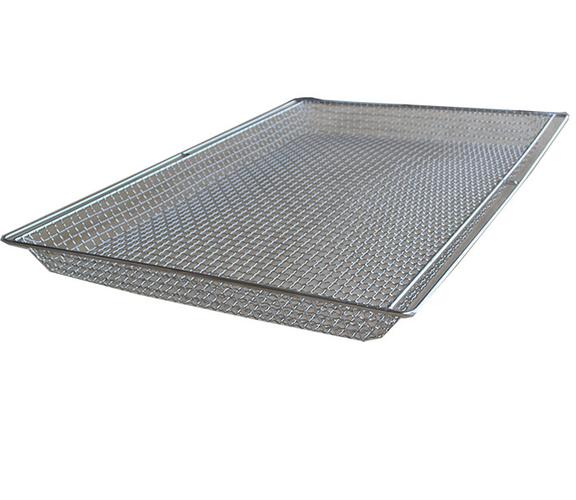
An industrial wire mesh tray is a robust, open-structured container engineered for continuous production environments where hygiene, load stability, and long-term operational reliability are non-negotiable. Unlike standard storage bins, these trays are designed for high-frequency handling, automated processing lines, and demanding sanitation protocols. They solve critical production problems: ensuring uniform airflow during drying and cooling, facilitating rapid cleaning and drainage, and providing secure transport of components between processing stages. For B2B buyers—importers, distributors, and manufacturing engineers—sourcing the right tray means safeguarding product integrity, reducing downtime, and achieving predictable operational costs.
Product Features and Engineering Advantages
Industrial wire mesh trays are defined by their construction. The reinforced frame design—typically using thicker wire or formed edges—improves load stability during repeated transportation and high-frequency industrial handling, preventing deformation and extending service life. Spot-welded or crimped mesh joints ensure structural integrity under vibration, while the open mesh pattern allows for optimal airflow, drainage, and visibility. This design enhances cleaning efficacy, reduces contamination risks, and supports faster drying times. The engineering focus is on withstanding rigorous washing cycles, chemical exposure, and temperature fluctuations without compromising performance.
- High corrosion resistance for extended service in wet or chemical environments
- Easy cleaning surface with no hidden crevices, meeting food safety standards
- Stable load capacity due to reinforced frame and optimized mesh configuration
- Custom manufacturing options to fit specific equipment and process requirements
Application Scenarios
Industrial wire mesh trays are indispensable across multiple sectors. In food processing, they are used for drying, cooling, freezing, and transporting products such as baked goods, meats, and vegetables, where hygiene and airflow are paramount. Bakery operations rely on them for proofing and baking, benefiting from even heat distribution. Industrial manufacturing employs these trays for parts washing, degreasing, and heat treatment, where chemical resistance and durability are essential. Pharmaceutical and laboratory settings require sterilizable trays for glassware and instruments, prioritizing inert materials and easy sanitation. In storage and transportation, mesh trays enable efficient space utilization and ventilation, preventing moisture buildup. Each application dictates specific mesh size, material grade, and load requirements, making tailored solutions critical.
Material Options and Manufacturing Details
Material selection is a key procurement decision. 304 stainless steel offers reliable corrosion resistance for food contact applications and daily industrial cleaning, suitable for most general-purpose environments. 316 stainless steel provides superior resistance to chlorides and aggressive chemicals, making it ideal for pharmaceutical, marine, or heavy chemical processing. 201 stainless steel is a cost-effective option for dry or less corrosive environments, though it offers lower corrosion resistance. Aluminum trays are lightweight and corrosion-resistant but may not withstand high-temperature or heavy-load applications. Buyers must balance cost against environment, cleaning agents, and regulatory requirements.
Specifications and Technical Parameters
Technical specifications should align with equipment and process needs. Size can be customized to fit oven racks, conveyor systems, or shelving. Wire diameter typically ranges from 2mm to 6mm, affecting load capacity and durability. Mesh opening varies from 5mm to 50mm, determining airflow and product retention. Load capacity depends on design and material, with standard trays handling 20-50 kg uniformly distributed. Surface treatment such as passivation or electropolishing enhances corrosion resistance and cleanability. Production tolerances should be tight to ensure compatibility with automated handling systems. Buyers should provide detailed drawings or samples for accurate quotations.
Custom OEM Manufacturing Service
For unique production requirements, OEM stainless steel tray manufacturing is essential. A capable supplier offers custom sizing, design modifications (e.g., reinforced edges, dividers), logo marking, and special packaging for export. Material selection guidance and prototype development ensure fit-for-purpose solutions before bulk production. Experienced manufacturers provide technical drawings for approval and maintain consistent quality across volumes. For custom requirements, please contact our team to discuss your specifications.
Purchasing Guide for Industrial Buyers
Effective procurement hinges on thorough evaluation. Begin by confirming the working environment: temperature, humidity, chemical exposure, and cleaning protocols. Verify material grade compatibility with food safety or industrial standards. Ensure equipment compatibility by checking dimensions, load ratings, and handling interfaces. Evaluate supplier production capacity, quality control processes (e.g., material certificates, weld integrity tests), and export experience. For bulk orders, clarify packaging (e.g., palletized, shrink-wrapped), delivery schedules, and Incoterms. Request samples for validation. A reliable industrial mesh tray supplier will provide transparent documentation and responsive communication.
- Confirm working environment and cleaning methods
- Check material requirements against industry standards
- Verify equipment compatibility and load capacity
- Evaluate supplier production capacity and quality control
- Review packaging and delivery terms for bulk shipments
FAQ
Q1: What stainless steel grade is recommended for food processing applications?
304 stainless steel is commonly used for food contact surfaces due to its corrosion resistance and cleanability. For environments with chlorides or aggressive sanitizers, 316 stainless steel is preferred, though at a higher cost. Always verify compliance with local food safety regulations.
Q2: Can the tray size be customized?
Yes, most manufacturers offer custom sizes to fit specific equipment dimensions. Provide detailed drawings or sample trays for accurate replication. Custom sizes may affect lead times and pricing, so confirm with the supplier early in the process.
Q3: Do you provide OEM manufacturing service?
Yes, OEM services include custom design, material selection, logo marking, and special packaging. A reputable manufacturer will offer prototype development and pre-production samples to ensure specifications are met before bulk production.
Q4: What information should buyers provide before quotation?
Provide tray dimensions (length, width, height), wire diameter, mesh opening, material grade, surface treatment, load requirements, and quantity. Also specify any special features like dividers, handles, or stacking capabilities. Clear technical drawings expedite accurate quoting.
Q5: How do you control product quality?
Quality control includes incoming material inspection, in-process checks for weld strength and dimensions, and final inspection for surface finish and load testing. Suppliers should provide material certificates and inspection reports. Third-party inspections can be arranged for large orders.
Q6: What is the typical lead time for bulk orders?
Lead times vary based on order volume and customization. Standard trays may ship in 2-4 weeks, while custom OEM orders typically require 4-8 weeks. Factors include material availability, production scheduling, and shipping method. Always confirm lead times in the contract.
Q7: Can trays be supplied with special coatings?
Yes, coatings such as PTFE or powder coating can be applied for specific chemical resistance or non-stick properties. However, coatings may affect cleanability and are not suitable for all food applications. Consult with the manufacturer for compatibility.

