


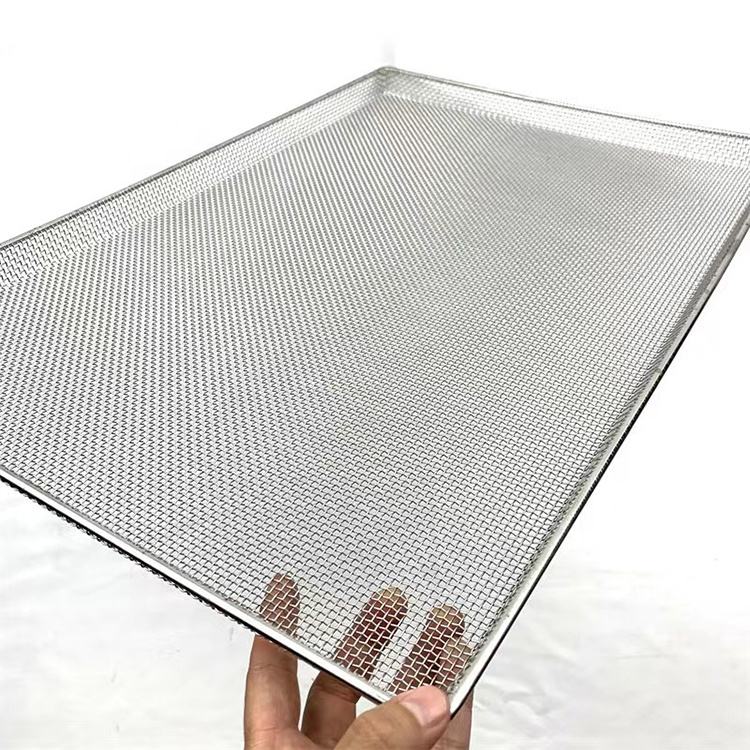
Industrial Food Tray Sourcing: A Buyer's Guide to Stainless Steel Trays
Product Introduction
In the world of industrial food processing and manufacturing, the humble tray food tray is far more than a simple container. It is a critical component in production lines, impacting hygiene, efficiency, and product quality. This industrial tray is designed for continuous production environments where hygiene, load stability, and long-term operation reliability are critical. Unlike consumer-grade products, industrial trays must withstand frequent handling, high temperatures, aggressive cleaning agents, and heavy loads without compromising structural integrity or food safety.
For procurement managers, understanding the nuances of these products is essential. A poorly specified tray can lead to production downtime, contamination risks, and increased replacement costs. Conversely, a well-engineered stainless steel tray can streamline operations, reduce waste, and provide years of reliable service. This article delves into the key considerations for sourcing industrial trays, from material selection to supplier evaluation, helping you make informed decisions that align with your operational and budgetary requirements.
Product Features and Engineering Advantages
Industrial trays are engineered for durability and performance. The reinforced frame design, for instance, improves load stability during repeated transportation and high-frequency industrial handling. This is not a cosmetic feature; it directly reduces the risk of deformation and product loss. Manufacturing processes such as precision welding, edge deburring, and surface passivation ensure a smooth, easy-to-clean surface that resists bacterial growth and corrosion.
Key features to look for include:
- High corrosion resistance: Essential for environments with moisture, steam, or chemical cleaning.
- Easy cleaning surface: Smooth, non-porous finishes prevent residue buildup and simplify sanitation.
- Stable load capacity: Reinforced corners and frames prevent warping under heavy loads.
- Custom manufacturing options: Trays can be tailored to specific equipment dimensions and production needs.
These features translate into tangible benefits: reduced maintenance, longer service life, and compliance with stringent food safety regulations. When evaluating suppliers, ask for detailed engineering drawings and material certificates to verify these attributes.
Application Scenarios
Stainless steel trays are indispensable across a range of industries. In food processing, they are used for transporting, drying, cooling, and freezing products. The non-reactive nature of stainless steel ensures no taste or odor transfer, making it ideal for meat, dairy, and bakery items. In bakery operations, perforated trays allow for even air circulation during baking and cooling, while solid trays are used for proofing and storage.
In industrial manufacturing, these trays serve as durable carriers for components during assembly, washing, and painting processes. Their resistance to chemicals and heat makes them suitable for drying and cleaning processes in automotive and electronics production. Pharmaceutical and laboratory environments demand trays that can be sterilized and are non-shedding; stainless steel meets these criteria. For storage and transportation, stackable designs optimize space and protect goods during movement.
Each application has specific requirements. For example, a commercial bakery might prioritize mesh trays for airflow, while a meat processor might need solid trays with raised edges to contain liquids. Understanding your process is the first step in selecting the right tray.
Material Options and Manufacturing Details
The choice of material significantly impacts performance and cost. 304 stainless steel is the workhorse grade, offering reliable corrosion resistance for food contact applications and daily industrial cleaning environments. It is suitable for most general-purpose trays and is cost-effective. 316 stainless steel contains molybdenum, providing superior resistance to chlorides and aggressive chemicals, making it ideal for pharmaceutical, marine, and heavy chemical environments. It comes at a higher cost but extends service life in harsh conditions.
201 stainless steel is a lower-cost alternative with adequate corrosion resistance for dry or less demanding environments. It is often used in budget-sensitive applications but may not withstand frequent wet cleaning. Aluminum trays are lightweight and offer good thermal conductivity, making them suitable for baking, but they are prone to denting and require protective coatings for acidic foods.
Manufacturing details matter: look for trays with fully welded seams, polished edges, and consistent gauge thickness. These details prevent weak points and ensure a uniform surface that is easy to sanitize. For custom requirements, please contact our team to discuss material selection and fabrication options.
Specifications and Technical Parameters
When specifying trays, consider the following parameters:
- Size: Available sizes can be customized according to equipment dimensions and production requirements. Standard sizes range from 400x300mm to 800x600mm.
- Thickness: Typically 0.8mm to 1.5mm for stainless steel, with thicker gauges for heavy loads.
- Capacity/Weight loading: Depends on design; reinforced trays can hold up to 50kg or more.
- Layers: Single or multi-tier racks for space efficiency.
- Mesh opening and wire diameter: For mesh trays, specify opening size (e.g., 5x5mm to 20x20mm) and wire diameter (1.0mm to 3.0mm) to balance airflow and strength.
- Tray compatibility: Ensure trays fit existing racks, ovens, or conveyors.
- Surface treatment: Passivation or electropolishing for enhanced corrosion resistance.
- Production tolerance: Typically ±1mm for dimensions, ensuring interchangeability.
Provide detailed drawings or samples to your supplier to avoid mismatches. For custom requirements, please contact our team for a tailored quotation.
Custom OEM Manufacturing Service
Many industrial buyers require trays that fit unique equipment or processes. A capable OEM manufacturer offers:
- Custom size and design: Trays built to your exact dimensions, with features like handles, dividers, or drainage holes.
- Logo marking: Laser etching or stamping for branding and traceability.
- Special packaging: Protective packaging for export or automated handling.
- Material selection: Guidance on the best grade for your environment.
- Prototype development: Rapid sampling to validate fit and function.
- Bulk production: Scalable manufacturing with consistent quality control.
When evaluating an OEM partner, ask for examples of past custom projects and their production capacity. A reliable manufacturer will have in-house engineering support and rigorous quality assurance. For custom requirements, please contact our team to discuss your project.
Purchasing Guide for Industrial Buyers
Effective procurement of industrial trays requires a systematic approach. Start by defining your requirements:
- Confirm working environment: Will the tray be exposed to moisture, chemicals, high heat, or heavy loads? This determines the material and design.
- Check material requirements: Food contact requires 304 or 316 stainless steel; corrosive environments may necessitate 316.
- Verify equipment compatibility: Measure existing racks, ovens, or conveyors and ensure trays fit within tolerances.
- Evaluate supplier production capacity: Can they handle your volume and lead times? Request a factory audit or video tour.
- Assess quality control: Ask for material certificates, inspection reports, and samples.
- Review export experience and packaging: Ensure they understand international shipping requirements.
- Confirm delivery reliability: Check lead times and past performance.
Additionally, consider total cost of ownership, not just unit price. A slightly higher-priced tray that lasts twice as long is often more economical. Negotiate payment terms and warranties to protect your investment.
常见问题
Q1: What stainless steel grade is recommended for food processing applications?
304 stainless steel is the standard for most food processing due to its excellent corrosion resistance and compliance with food safety regulations. For environments with high chloride exposure or strict hygiene requirements, 316 stainless steel is recommended.
Q2: Can the tray size be customized?
Yes, we offer custom sizes to fit your specific equipment and production needs. Provide dimensions and load requirements, and we will design a tray that meets your specifications.
Q3: Do you provide OEM manufacturing service?
Absolutely. We offer full OEM services including custom design, logo marking, special packaging, and material selection. Our engineering team can develop prototypes and scale to bulk production.
Q4: What information should buyers provide before quotation?
Provide tray dimensions, material grade, load capacity, surface finish, quantity, and any special features. Drawings or samples are helpful. Also specify delivery terms and destination.
Q5: How do you control product quality?
We implement strict quality control at every stage: incoming material inspection, in-process checks, and final inspection. We provide material certificates and can arrange third-party inspections as needed.
Q6: What is the typical lead time for bulk orders?
Lead time depends on order volume and customization. Standard trays ship in 2-3 weeks; custom orders may take 4-6 weeks. We will confirm upon order placement.
Q7: Do you offer samples for evaluation?
Yes, we can provide samples for a fee, which is refundable against a bulk order. This allows you to verify quality and fit before committing.

