


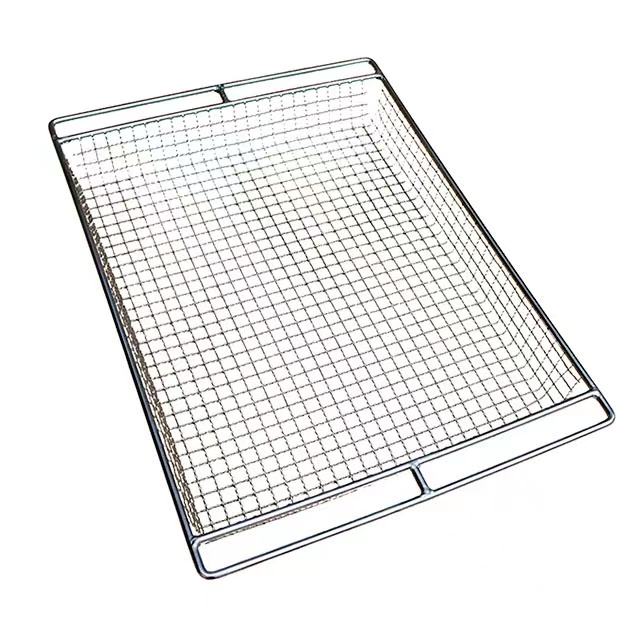
Industrial Food Tray Manufacturing: A Strategic Sourcing Guide for B2B Buyers
Product Introduction
In the context of industrial food processing and manufacturing, a tray food tray is not merely a container but a critical component of production flow. These trays are engineered to facilitate the safe, efficient, and hygienic handling of food products throughout various stages, including preparation, processing, drying, cooling, and transportation. For B2B buyers, selecting the right tray is a strategic decision that impacts operational efficiency, product safety, and long-term cost. This article serves as a comprehensive procurement guide, offering insights into the technical specifications, material options, and supplier evaluation criteria essential for sourcing trays that meet the rigorous demands of industrial environments. Understanding these factors is essential for importers, distributors, and industrial buyers aiming to secure reliable solutions that integrate seamlessly with their production lines.
Product Features and Engineering Advantages
The design and construction of industrial trays are focused on durability, hygiene, and operational reliability. Unlike consumer-grade products, these trays are built to withstand continuous use in demanding environments. Key features include:
- High corrosion resistance: Constructed from materials like stainless steel, these trays resist rust and degradation from frequent washing and exposure to food acids and cleaning agents.
- Easy cleaning surface: Smooth, non-porous surfaces and hygienic design minimize bacterial growth and facilitate rapid sanitation, meeting strict food safety standards.
- Stable load capacity: Reinforced frames and structural designs ensure the trays maintain their shape and stability under heavy loads during transportation and stacking.
- Custom manufacturing options: Manufacturers offer flexibility in size, mesh configuration, and material to align with specific equipment and process requirements.
These features translate into tangible benefits: reduced replacement costs, minimized downtime for cleaning, and enhanced product safety. The engineering behind these trays, such as the choice of wire diameter and mesh opening, directly influences airflow and drainage, which are critical in drying and cooling processes. By understanding these engineering advantages, buyers can select trays that optimize their production efficiency and extend the lifespan of their equipment.
Application Scenarios
Industrial trays are utilized across a wide spectrum of industries, each with unique requirements. In food processing, trays are essential for handling raw materials, intermediate products, and finished goods, ensuring hygienic transport between processing stages. Bakery operations rely on trays for proofing, baking, and cooling, where uniform airflow and heat distribution are crucial. In industrial manufacturing, trays are used for parts washing, drying, and assembly line transport, requiring robust construction to withstand mechanical handling. Pharmaceutical and laboratory settings demand trays that meet stringent cleanliness standards and are compatible with sterilization processes. For storage and transportation, stackable and nestable trays optimize space utilization and protect products during movement. In commercial production, such as large-scale catering, trays facilitate efficient food service and inventory management. Each scenario underscores the importance of selecting trays that match the specific operational environment, ensuring both functionality and compliance with industry regulations.
Material Options and Manufacturing Details
Material selection is a critical decision in tray procurement, balancing cost, durability, and compatibility with the working environment. Common options include:
- 304 stainless steel: Provides reliable corrosion resistance for food contact applications and daily industrial cleaning environments. It is suitable for most food processing and general manufacturing applications.
- 316 stainless steel: Offers superior corrosion resistance, particularly against chlorides and harsh chemicals, making it ideal for pharmaceutical, chemical, and marine environments.
- 201 stainless steel: A cost-effective alternative with moderate corrosion resistance, suitable for dry or less aggressive environments where budget constraints are a priority.
- Aluminum: Lightweight and with good thermal conductivity, aluminum trays are often used in baking and cooling applications but may require protective coatings for acidic foods.
Manufacturing details such as welding techniques, surface treatment (e.g., passivation or electropolishing), and tolerance control significantly affect the tray's performance and lifespan. For instance, precise mesh welding ensures structural integrity and prevents wire displacement under load. Buyers should discuss these details with suppliers to ensure the chosen material and manufacturing process align with their specific application and cleaning protocols.
Specifications and Technical Parameters
When specifying trays, buyers must define key parameters to ensure compatibility and performance. Critical specifications include:
- Size: Available sizes can be customized according to equipment dimensions and production requirements, ensuring seamless integration with existing racks and conveyors.
- Thickness: Material thickness (e.g., 1.0mm to 2.0mm for stainless steel) affects load capacity and durability.
- Capacity/Weight loading: Determined by wire diameter, mesh pattern, and frame reinforcement, load ratings should be specified based on the heaviest expected load.
- Layers: For multi-tier drying or storage, the number of layers and tray spacing must be defined.
- Mesh opening and wire diameter: These parameters influence airflow, drainage, and product support; typical mesh openings range from 5mm to 50mm.
- Tray compatibility: Trays must fit standardized rack systems (e.g., EN or DIN standards) for interchangeability.
- Surface treatment: Options include polished, passivated, or coated surfaces to enhance hygiene and corrosion resistance.
- Production tolerance: Dimensional tolerances (e.g., ±1mm) ensure proper fit and function.
Buyers should provide detailed drawings or samples to suppliers to avoid costly mismatches. Where specific parameters are not predetermined, industry-standard ranges can serve as a starting point for discussion.
Custom OEM Manufacturing Service
For buyers with unique requirements, OEM manufacturing services offer tailored solutions. A capable manufacturer can provide:
- Custom size and design: Trays can be engineered to fit specific equipment or optimize production flow.
- Logo marking: Branding options for identification and traceability.
- Special packaging: Packaging designed to protect trays during shipping and facilitate handling.
- Material selection: Assistance in choosing the optimal material grade based on application and budget.
- Prototype development: Rapid prototyping to validate design before mass production.
- Bulk production: Scalable manufacturing capacity to meet large volume orders with consistent quality.
Engaging with an experienced OEM partner ensures that custom trays meet precise specifications and regulatory standards. For custom requirements, please contact our team to discuss your project and receive a tailored proposal.
Purchasing Guide for Industrial Buyers
Effective procurement of industrial trays requires a systematic approach. Consider the following steps and checklist:
- Confirm working environment: Identify exposure to moisture, chemicals, temperature extremes, and cleaning agents to determine material suitability.
- Check material requirements: Verify compliance with food safety regulations (e.g., FDA, EU 1935/2004) and industry-specific standards.
- Verify equipment compatibility: Ensure tray dimensions and design align with existing racks, conveyors, and automation systems.
- Evaluate supplier production capacity: Assess manufacturing capabilities, quality control processes, and ability to meet delivery schedules.
Additionally, buyers should consider:
- Quality control: Request samples and review inspection reports to confirm product consistency.
- Production capability: Evaluate the supplier's technology, workforce, and capacity for scaling orders.
- Export experience: Choose suppliers familiar with international shipping and documentation.
- Packaging: Ensure packaging protects trays from damage during transit and is cost-effective.
- Delivery reliability: Confirm lead times and logistics arrangements to avoid production disruptions.
By following this guide, buyers can mitigate risks and build reliable supply chains. Always request detailed quotations and clarify terms before finalizing orders.
常见问题
What stainless steel grade is recommended for food processing applications?
For most food processing applications, 304 stainless steel is recommended due to its reliable corrosion resistance and compliance with food contact regulations. However, for environments with high chloride exposure or strict hygiene requirements, 316 stainless steel offers superior performance.
Can the tray size be customized?
Yes, tray sizes can be fully customized to match equipment dimensions and production needs. Provide detailed drawings or samples, and the manufacturer will develop trays to your exact specifications.
Do you provide OEM manufacturing service?
Yes, OEM services are available, including custom design, material selection, logo marking, and special packaging. Our engineering team collaborates with buyers to develop trays that meet specific operational requirements.
What information should buyers provide before quotation?
Buyers should provide tray dimensions, material grade, load requirements, mesh specifications, quantity, and any special features or certifications needed. Application details and delivery timelines are also helpful for accurate quoting.
How do you control product quality?
Quality control involves incoming material inspection, in-process checks, and final dimensional and surface inspections. We adhere to ISO 9001 standards and can provide inspection reports and samples for buyer verification.
What is the typical lead time for bulk orders?
Lead times vary based on order size and customization, typically ranging from 4 to 8 weeks after sample approval. We work closely with buyers to schedule production and shipping to meet project timelines.
Are trays compatible with automated handling systems?
Yes, trays can be designed to meet industry standards for compatibility with automated racks, conveyors, and robotic handling systems. Provide system specifications for precise fitting.
Image ALT Text Suggestion
Stainless steel mesh tray for industrial food drying applications
SEO Title
Industrial Food Tray Manufacturing: B2B Sourcing Guide
Meta Description
Discover industrial food trays for B2B buyers: stainless steel options, custom OEM manufacturing, and procurement tips for food processing, bakery, and pharmaceutical applications.
SEO Keywords
tray food tray, stainless steel mesh tray, industrial food tray, food processing tray, custom stainless steel tray, OEM tray manufacturer, commercial drying rack, industrial tray supplier, stainless steel drying tray

