


Industrial Food Tray & Food Tray Solutions for B2B Procurement
Product Introduction
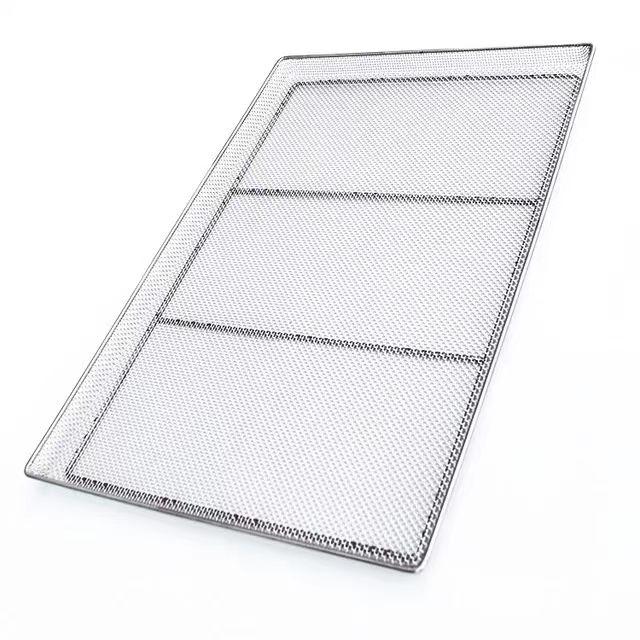
In industrial food processing and manufacturing environments, the humble tray food tray is far more than a container—it is a critical component that directly impacts operational efficiency, hygiene standards, and product quality. This industrial food tray is designed for continuous production environments where hygiene, load stability, and long-term operation reliability are critical. Whether you are an importer, distributor, or an engineering company specifying equipment for a new processing line, understanding the nuances of industrial food trays is essential for making informed procurement decisions.
Industrial food trays serve a multitude of purposes across the production floor. They are used for transporting raw materials, holding components during assembly, drying or cooling finished goods, and facilitating cleaning processes. In food processing, they must withstand rigorous washdowns, extreme temperatures, and contact with various food types without compromising safety. For manufacturing and engineering companies, these trays provide a stable platform for parts during machining, coating, or inspection. The primary production problem they solve is the need for a durable, hygienic, and efficient means of moving and holding products through automated and manual processes. Without proper trays, production lines suffer from downtime, product damage, and contamination risks. Therefore, for B2B buyers, selecting the right industrial food tray is not just a purchasing decision—it is an investment in production reliability and product safety.
Product Features and Engineering Advantages
When evaluating industrial food trays, it is crucial to look beyond basic descriptions and understand the engineering that ensures performance. The reinforced frame design improves load stability during repeated transportation and high-frequency industrial handling. This is achieved through a combination of robust construction techniques and high-quality materials. For instance, trays are often manufactured with a welded or riveted frame that maintains structural integrity even under heavy loads. The mesh or perforated surface, if present, is precisely engineered to allow optimal airflow and drainage while preventing small items from falling through.
Manufacturing processes such as laser cutting, CNC bending, and automated welding ensure consistent quality and tight tolerances. These processes result in trays with smooth edges, uniform mesh openings, and strong joints that resist fatigue. In industrial environments, trays are subjected to constant loading and unloading, stacking, and sometimes harsh cleaning chemicals. The engineering advantages of a well-designed tray include:
- High corrosion resistance due to appropriate material selection and surface treatment.
- Easy cleaning surface with minimal crevices to prevent bacterial growth, essential for food safety.
- Stable load capacity ensured by structural analysis and reinforced corners.
- Custom manufacturing options to fit specific equipment and processes.
These features translate into reduced replacement costs, lower maintenance downtime, and improved overall operational efficiency. For buyers, it is important to request detailed engineering specifications and test reports to verify these advantages.
Application Scenarios
Industrial food trays are versatile and find applications across numerous sectors. Understanding the specific requirements of each scenario is key to selecting the right product.
Food Processing: In meat, poultry, and seafood processing, trays are used for transporting cuts, freezing, and blanching. Stainless steel trays with perforations allow efficient drainage and air circulation. They must meet strict hygiene standards and resist corrosion from blood, salts, and cleaning agents. For bakeries, trays are used for proofing dough, baking, and cooling. Here, trays must withstand high temperatures and provide even heat distribution. Industrial manufacturing often utilizes trays for parts washing, degreasing, and drying. Mesh trays are ideal for allowing fluids to drain and air to flow. In pharmaceutical and laboratory settings, trays are used for sterilization, sample storage, and cleanroom operations. They require precision manufacturing and often material certifications. Commercial production, such as in large-scale catering, uses trays for storage and transportation of prepared foods. Each application demands specific features: for drying processes, mesh openings are critical; for cleaning, smooth surfaces and drainage holes are important; for storage and transportation, stackability and load capacity are paramount.
Material Options and Manufacturing Details
Material selection is one of the most important decisions in specifying an industrial food tray. The most common materials are stainless steel grades 304, 316, and 201, as well as aluminum.
304 Stainless Steel: Provides reliable corrosion resistance for food contact applications and daily industrial cleaning environments. It is suitable for most food processing and manufacturing applications where exposure to mild chemicals and moisture is expected. It offers a good balance of cost and performance.
316 Stainless Steel: Offers superior corrosion resistance, particularly against chlorides and harsh chemicals. It is recommended for applications involving salty foods, seafood processing, or environments where strong cleaning agents are used. While more expensive, it provides longer service life in aggressive conditions.
201 Stainless Steel: A lower-cost alternative with lower nickel content. It offers moderate corrosion resistance and is suitable for dry environments or light-duty applications. It is not recommended for frequent washdowns or exposure to corrosive substances.
Aluminum: Lightweight and cost-effective, but with lower strength and corrosion resistance compared to stainless steel. It is often used in applications where weight is a concern, such as in some baking trays, but may require coatings to improve durability.
Manufacturing details such as surface treatment (e.g., passivation, electropolishing) enhance corrosion resistance and cleanability. Buyers should discuss their specific environment with the manufacturer to select the optimal material and finish.
Specifications and Technical Parameters
For procurement, precise specifications are essential. While custom sizes are common, here are typical parameters to consider:
- Size: Available sizes can be customized according to equipment dimensions and production requirements. Common sizes range from 400x300 mm to 800x600 mm or larger.
- Thickness: Material thickness typically ranges from 0.8 mm to 2.0 mm, depending on load requirements.
- Capacity/Weight Loading: Load capacity varies with design; standard trays can hold 20-50 kg, while heavy-duty designs can support up to 100 kg or more.
- Layers: Trays can be used individually or stacked in racks; layer count depends on rack design.
- Mesh Opening: For mesh trays, openings range from 2 mm to 20 mm, selected based on product size and airflow needs.
- Wire Diameter: Typically 1.0 mm to 3.0 mm for mesh trays, affecting strength and openness.
- Tray Compatibility: Trays should be compatible with existing racks, conveyors, and washing systems.
- Surface Treatment: Passivation, pickling, or coating to enhance corrosion resistance.
- Production Tolerance: Dimensional tolerances are typically ±1 mm for critical dimensions.
Buyers should provide detailed drawings or samples to ensure exact fit and function.
Custom OEM Manufacturing Service
Many industrial buyers require customized trays to fit specific equipment or processes. A reliable OEM manufacturer offers a range of services:
- Custom size and design: Trays can be engineered to match equipment dimensions, load requirements, and handling systems.
- Logo marking: For branding or identification, trays can be laser-etched or stamped with logos.
- Special packaging: To protect trays during shipping and storage, packaging can be customized.
- Material selection: Manufacturers can advise on the best material for your application.
- Prototype development: Before mass production, prototypes can be produced for testing and approval.
- Bulk production: High-volume production with consistent quality control.
For custom requirements, please contact our team to discuss your project. We work closely with clients to ensure specifications are met and provide samples for validation.
Purchasing Guide for Industrial Buyers
To make informed decisions, consider the following checklist:
- Confirm working environment: Identify exposure to moisture, chemicals, temperature extremes, and cleaning methods.
- Check material requirements: Select the appropriate stainless steel grade or aluminum based on corrosion resistance needed.
- Verify equipment compatibility: Ensure tray dimensions, load capacity, and design fit existing racks, conveyors, and automated systems.
- Evaluate supplier production capacity: Assess manufacturing capabilities, quality control processes, and export experience.
Additionally, request samples for testing, verify certifications (e.g., ISO, NSF), and discuss delivery terms. A reliable supplier will provide detailed quotations, lead times, and after-sales support. When evaluating suppliers, consider their experience in your industry, their quality assurance practices, and their ability to handle custom orders. Bulk purchasing requires attention to packaging, shipping, and inventory management. Establish clear quality inspection criteria and consider third-party inspections for large orders.
FAQ
Q1: What stainless steel grade is recommended for food processing applications?
A1: For most food processing applications, 304 stainless steel offers a good balance of corrosion resistance and cost. However, for environments with high chloride exposure or strict hygiene requirements, 316 stainless steel is recommended. 201 is only suitable for dry, non-corrosive applications.
Q2: Can the tray size be customized?
A2: Yes, we specialize in custom manufacturing. Provide us with your required dimensions, load requirements, and any equipment compatibility details, and we will design and produce trays to your specifications.
Q3: Do you provide OEM manufacturing service?
A3: Absolutely. We offer full OEM services including custom design, logo marking, special packaging, and material selection. Our engineering team can work with you from prototype to mass production.
Q4: What information should buyers provide before quotation?
A4: Please provide tray dimensions, material preference, load capacity, surface finish, quantity, and any specific application details. Drawings or samples are helpful for accurate quoting.
Q5: How do you control product quality?
A5: We implement strict quality control at every stage: incoming material inspection, in-process checks, and final inspection. We use calibrated measuring tools and can provide material certificates and test reports. Third-party inspections are welcome.
Q6: What is the typical lead time for bulk orders?
A6: Lead time varies based on order quantity and customization. For standard trays, it is usually 4-6 weeks; for custom orders, 6-8 weeks after sample approval. We will confirm at the time of order.
Q7: Can trays be stacked for storage?
A7: Yes, our trays are designed for stacking, with features such as stackable feet or reinforced rims to ensure stability. Please specify your stacking requirements when ordering.
Q8: Do you offer international shipping?
A8: Yes, we have extensive experience in exporting to Europe and North America. We can handle shipping arrangements and provide all necessary documentation.

