


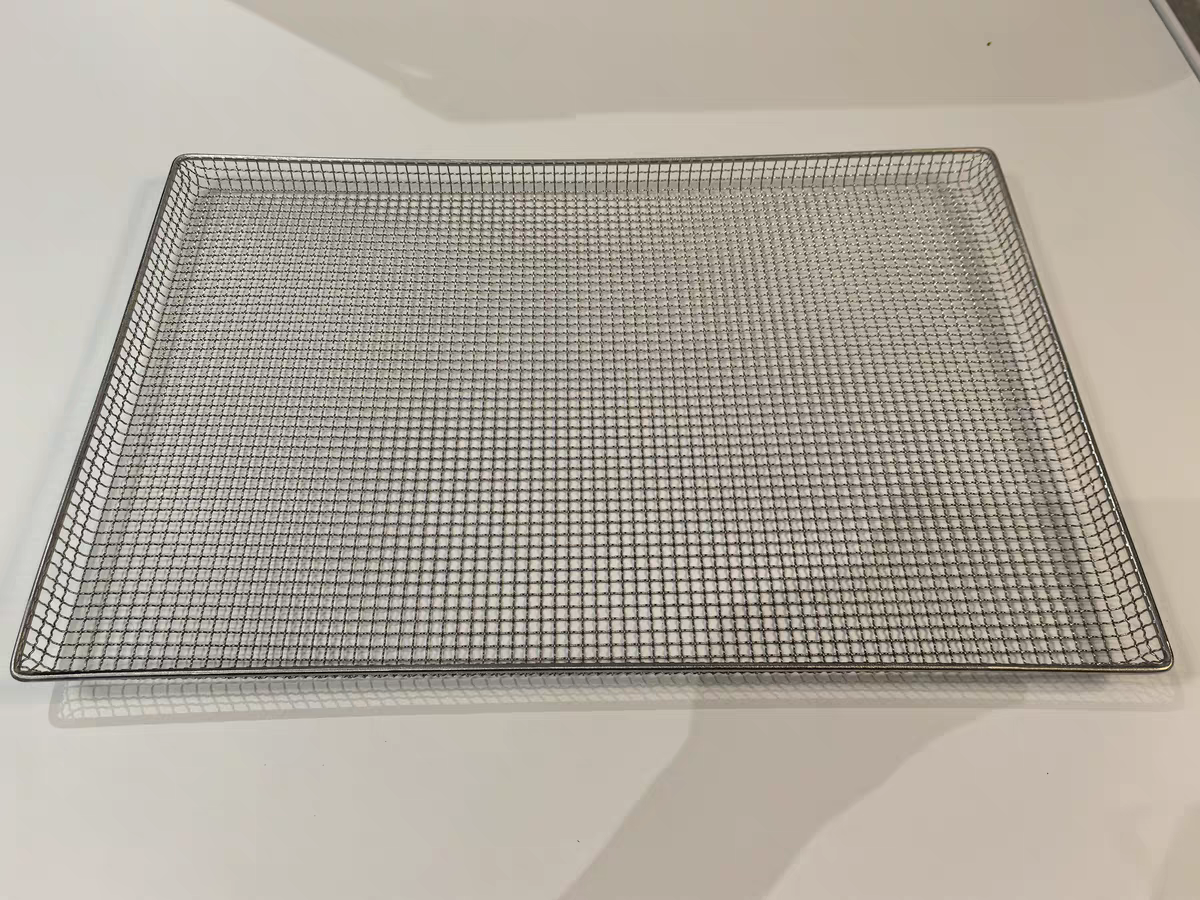
Industrial Dehydrator Trays: A Strategic Sourcing Guide for B2B Buyers
Product Introduction
In the world of industrial dehydration—whether you're processing fruits, vegetables, meats, or chemicals—the dehydrator tray is far more than a simple accessory. It is a critical component that directly influences airflow, drying uniformity, loading capacity, and overall operational efficiency. For B2B buyers, importers, and OEM manufacturers, selecting the appropriate dehydrator tray is a strategic sourcing decision that impacts product quality, energy consumption, and maintenance costs. Unlike consumer-grade trays, industrial trays must withstand continuous operation, frequent cleaning, and heavy loads without deformation. This guide is designed for professionals who need to cut through the marketing noise and understand the engineering and supply chain factors that matter. We'll explore how to specify trays for your specific process, evaluate suppliers beyond the brochure, and avoid common procurement pitfalls that can lead to costly downtime.
Product Features and Engineering Advantages
Industrial dehydrator trays are engineered for durability and performance. Key features include:
- High corrosion resistance: Essential for food safety and longevity in humid drying environments.
- Easy cleaning surface: Smooth welds and open mesh design prevent product buildup and simplify sanitation.
- Stable load capacity: Reinforced frames and cross-bracing maintain shape under heavy loads.
- Custom manufacturing options: Trays can be tailored to fit specific dehydrator models and product requirements.
The structural design of a dehydrator tray is paramount. A well-designed tray features a reinforced frame that provides rigidity during repeated loading and unloading. For mesh trays, the wire diameter and mesh opening are carefully calculated to balance airflow with product support. Manufacturing processes such as precision welding and edge finishing ensure there are no sharp points that could damage products or injure operators. In high-frequency industrial environments, trays must resist warping and fatigue; this is achieved through proper material selection and stress-relieving treatments. Additionally, trays are often stackable, and consistent dimensional tolerances are critical for smooth automation and stable stacking.
Application Scenarios
Dehydrator trays are used across a multitude of industries, each with unique requirements:
- Food Processing: Drying fruits, vegetables, herbs, and meat. Trays must be food-grade, easy to sanitize, and resist acidic or alkaline residues.
- Bakery: Proofing and drying dough or baked goods. Trays need to be non-reactive and withstand temperature fluctuations.
- Industrial Manufacturing: Drying components after washing or coating. Trays must handle chemicals and provide stable support.
- Pharmaceutical: Drying of granules or tablets. Trays require strict cleanliness and often validation for use in controlled environments.
- Laboratory: Sample drying and testing. Small-scale trays with precise mesh sizes are common.
- Commercial Production: Large-scale drying of agricultural products. High-capacity trays that stack efficiently are essential.
In each scenario, the choice of tray material and design is driven by the specific process. For example, in food processing, 304 stainless steel is often specified for its corrosion resistance and food safety. In pharmaceutical applications, 316 stainless steel may be required for its enhanced resistance to chlorides and cleaning agents. Understanding your process environment is the first step in selecting the right tray.
Material Options and Manufacturing Details
The material of a dehydrator tray dictates its performance, lifespan, and cost. Common options include:
- 304 Stainless Steel: Provides reliable corrosion resistance for food contact applications and daily industrial cleaning environments. It is the workhorse material for most food-grade trays.
- 316 Stainless Steel: Offers superior corrosion resistance, particularly against chlorides and harsh chemicals. Suitable for pharmaceutical and chemical processing where hygiene and resistance are critical. Higher cost but longer life in aggressive environments.
- 201 Stainless Steel: A lower-cost alternative with moderate corrosion resistance. Often used in dry environments or light-duty applications where cost is a primary driver.
- Aluminum: Lightweight and good thermal conductivity, but susceptible to corrosion in wet or acidic environments. Often used in bakery or low-moisture drying.
Manufacturing details such as weld quality, surface finish, and dimensional accuracy are equally important. Trays should be free of burrs and sharp edges. Mesh should be securely attached to the frame, often through welding or crimping. For food-grade trays, a passivation treatment may be applied to enhance corrosion resistance. Buyers should request material certificates and verify the grade to avoid substitutions.
Specifications and Technical Parameters
When specifying dehydrator trays, consider the following parameters:
- Size: Custom dimensions to fit your dehydrator racks. Typical sizes range from 400x600 mm to 800x1000 mm.
- Thickness: Frame thickness typically 1.0-2.0 mm; mesh wire diameter 0.5-2.0 mm.
- Capacity: Load capacity depends on design; typical trays support 10-50 kg evenly distributed.
- Layers: Trays are designed to stack; consider the number of layers in your dehydrator.
- Mesh Opening: From fine mesh (1-2 mm) for small products to open mesh (10-20 mm) for larger items.
- Surface Treatment: Polished, pickled, or passivated for corrosion resistance and cleanliness.
- Production Tolerance: Dimensional tolerances should be tight (±1 mm) for proper fit and stacking.
Buyers should provide detailed drawings or samples to ensure compatibility. If specifications are not fixed, work with the supplier to determine the optimal parameters for your process.
Custom OEM Manufacturing Service
For unique requirements, OEM manufacturing is the way to go. A capable supplier offers:
- Custom size and design: Trays tailored to your equipment and process.
- Logo marking: Branding on trays for identification.
- Special packaging: Protection during shipping and storage.
- Material selection: Guidance on the best grade for your application.
- Prototype development: Test before committing to bulk production.
- Bulk production: Consistent quality and timely delivery.
For custom requirements, please contact our team to discuss your project. We work closely with buyers to develop trays that meet exact specifications and provide samples for approval.
Purchasing Guide for Industrial Buyers
To make an informed purchasing decision, industrial buyers should follow a structured approach:
- Confirm working environment: Identify temperature, humidity, chemical exposure, and cleaning methods.
- Check material requirements: Select stainless steel grade based on corrosion resistance needed.
- Verify equipment compatibility: Ensure tray dimensions and loading method match your dehydrator.
- Evaluate supplier production capacity: Assess manufacturing capabilities, quality control, and export experience.
- Review packaging and delivery reliability: Confirm packaging suitable for long-distance shipping and track record of on-time delivery.
Additionally, request samples for testing, ask for material certificates, and visit the factory if possible. For bulk orders, establish a quality inspection protocol and consider third-party inspection. A reliable supplier will be transparent about their processes and open to audits.
常见问题
Q1: What stainless steel grade is recommended for food processing applications?
304 stainless steel is commonly recommended for food processing due to its good corrosion resistance and food-safe properties. For more aggressive environments with chlorides or high acidity, 316 stainless steel may be necessary. Always confirm with your food safety team.
Q2: Can the tray size be customized?
Yes, most manufacturers offer custom sizes to fit specific dehydrator models. Provide detailed dimensions and load requirements for a precise quotation.
Q3: Do you provide OEM manufacturing service?
Yes, we offer OEM services including custom design, logo marking, and special packaging. Contact our team with your requirements for a tailored solution.
Q4: What information should buyers provide before quotation?
Buyers should provide tray dimensions, material grade, mesh specifications, load capacity, quantity, and any special requirements such as surface treatment or packaging. Drawings or samples are helpful.
Q5: How do you control product quality?
We implement strict quality control at every stage: incoming material inspection, in-process checks, and final inspection before shipment. We can provide material certificates and inspection reports.
Q6: What is the typical lead time for bulk orders?
Lead time varies based on order quantity and customization. Typically 4-6 weeks for bulk production after sample approval. We will confirm at the time of order.
Q7: Do you offer samples for testing?
Yes, we offer samples for evaluation. Sample costs and shipping are typically borne by the buyer but may be credited against a bulk order.
Q8: How are trays packaged for export?
Trays are usually packed in wooden crates or cartons with protective materials to prevent damage during transit. Custom packaging is available upon request.

