


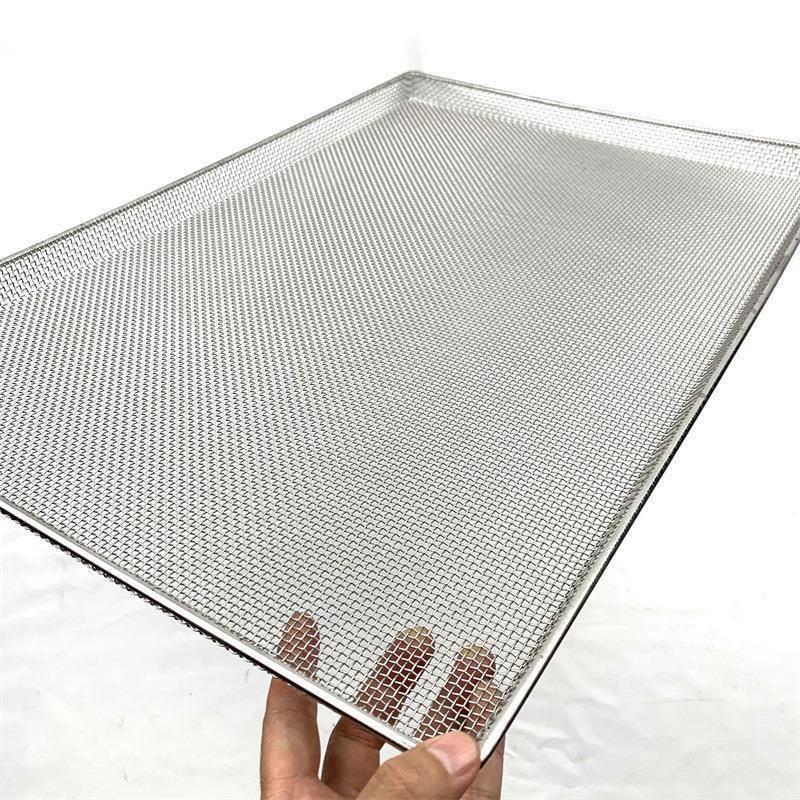
Industrial Cooling Rack Drying Tray: A Buyer’s Guide to Sourcing and Specification
Product Introduction
In industrial food processing and manufacturing, a cooling rack drying tray is not merely a surface for placing goods—it is a critical component in maintaining hygiene, ensuring consistent airflow, and optimizing production throughput. These trays are engineered to support products during cooling, drying, and transport, often in continuous or high-volume environments where reliability and cleanability are paramount. As a manufacturer, we design these trays to meet the rigorous demands of sectors such as bakery, pharmaceutical, and general manufacturing. The need for such equipment arises from the limitations of standard trays: inadequate load stability, poor corrosion resistance, or insufficient ventilation can lead to product loss, contamination risks, and downtime. For procurement teams, understanding the engineering behind these trays is essential to avoid costly mistakes and to select suppliers who can deliver consistent quality at scale.
Product Features and Engineering Advantages
Our cooling rack drying trays are built with structural integrity and longevity in mind. The reinforced frame design improves load stability during repeated transportation and high-frequency industrial handling, reducing deformation and extending service life. The mesh pattern is precisely controlled to ensure optimal airflow while preventing small items from falling through. Manufacturing processes include automated welding and rigorous surface treatment, which enhance durability and ease of cleaning. These trays are designed to withstand harsh cleaning agents and temperature fluctuations, making them suitable for wash-down environments. Key features include:
- High corrosion resistance through material selection and passivation treatment.
- Easy cleaning surface with smooth welds and minimal crevices.
- Stable load capacity verified through structural analysis and testing.
- Custom manufacturing options to fit specific equipment dimensions.
- Stackable and nestable designs for space-efficient storage.
These engineering advantages translate directly into operational benefits: fewer replacements, reduced product damage, and lower maintenance costs. For buyers, this means a lower total cost of ownership and a more reliable supply chain.
Application Scenarios
The versatility of cooling rack drying trays makes them indispensable across various industries. In food processing, they are used for cooling baked goods, drying washed produce, and transporting ingredients. The open mesh design allows uniform air circulation, preventing condensation and spoilage. In bakery operations, trays hold bread and pastries during cooling, ensuring consistent texture and crust quality. Industrial manufacturing relies on these trays for drying parts after cleaning or coating, where corrosion resistance and load stability are critical. Pharmaceutical and laboratory settings require trays that meet strict hygiene standards, often using stainless steel for easy sanitization. Commercial production lines use them for storage and transportation between processing stages. In each scenario, the choice of tray material and design directly impacts efficiency and product quality. For instance, in a wet environment, 316 stainless steel trays prevent rust and contamination, while in high-temperature drying, aluminum trays offer lightweight heat resistance. By understanding the specific demands of each application, buyers can select trays that optimize their processes.
Material Options and Manufacturing Details
Material selection is a critical decision for industrial buyers. Our trays are available in several grades of stainless steel and aluminum, each suited to different environments. 304 stainless steel provides reliable corrosion resistance for food contact applications and daily industrial cleaning environments, making it a cost-effective choice for general use. 316 stainless steel offers superior resistance to chlorides and harsh chemicals, ideal for pharmaceutical and chemical processing. 201 stainless steel is a more economical option with adequate corrosion resistance for dry or less aggressive environments, though it may not withstand frequent wash-downs. Aluminum trays are lightweight and offer good thermal conductivity, suitable for baking and cooling where weight is a concern, but they require protective coatings to prevent oxidation. Manufacturing details such as wire diameter, mesh opening, and frame thickness are tailored to the load requirements and airflow needs. Surface treatments, including passivation and electropolishing, further enhance corrosion resistance and cleanability. By selecting the appropriate material and finish, buyers can ensure optimal performance and longevity for their specific application.
Specifications and Technical Parameters
When specifying cooling rack drying trays, buyers should consider a range of technical parameters to ensure compatibility and performance. Key specifications include:
- Size: Customizable to fit equipment dimensions, with common sizes ranging from 400x600 mm to 800x1000 mm.
- Thickness: Wire diameter from 2 mm to 6 mm, frame thickness from 1.5 mm to 3 mm, depending on load requirements.
- Capacity: Load capacity typically from 20 kg to 100 kg per tray, verified through testing.
- Layers: Single or multi-layer configurations for space efficiency.
- Mesh opening: From 5x5 mm to 50x50 mm, balanced for airflow and product retention.
- Surface treatment: Passivation, electropolishing, or coating for enhanced corrosion resistance.
- Production tolerance: ±1 mm on dimensions to ensure fit and interchangeability.
These parameters should be confirmed with the supplier to avoid mismatches. For custom requirements, our engineering team can assist in developing specifications that meet your exact needs.
Custom OEM Manufacturing Service
As a manufacturer with extensive OEM experience, we offer full customization services for cooling rack drying trays. Our capabilities include custom size and design to match your equipment, logo marking for brand identification, special packaging for export, and material selection based on your operating environment. We also provide prototype development to validate designs before bulk production, ensuring that the final product meets your expectations. Our production lines are equipped to handle both small batches and high-volume orders, with strict quality control at every stage. For custom requirements, please contact our team to discuss your project. We work closely with buyers to translate their needs into precise manufacturing specifications, reducing lead times and ensuring a smooth procurement process.
Purchasing Guide for Industrial Buyers
Effective procurement of cooling rack drying trays requires careful consideration of several factors. To make informed decisions, buyers should follow these guidelines:
- Confirm working environment: Identify temperature ranges, humidity, and exposure to chemicals to select the right material.
- Check material requirements: Ensure the chosen grade meets food safety or industry standards.
- Verify equipment compatibility: Provide exact dimensions and load capacities to avoid fit issues.
- Evaluate supplier production capacity: Assess their ability to meet your volume and delivery timelines.
- Review quality control processes: Request test reports and certifications to ensure consistency.
- Consider packaging and shipping: Proper packaging prevents damage during transit.
- Establish a sampling process: Order samples to validate quality before bulk purchase.
Additionally, buyers should check the supplier’s export experience and references. A reliable supplier will have a track record of delivering to international markets and can provide documentation for customs and compliance. By following these steps, procurement teams can mitigate risks and build a resilient supply chain.
常见问题
What stainless steel grade is recommended for food processing applications?
For food processing, 304 stainless steel is typically recommended due to its reliable corrosion resistance and compliance with food safety standards. For environments with chlorides or harsh cleaning agents, 316 stainless steel offers superior performance. The choice depends on the specific cleaning chemicals and operating conditions. We can provide guidance based on your process.
Can the tray size be customized?
Yes, we offer custom sizes to fit your equipment dimensions. Provide us with the length, width, and height requirements, and we will design trays that integrate seamlessly with your production line. Customization also includes mesh pattern and wire diameter adjustments.
Do you provide OEM manufacturing service?
Absolutely. We provide full OEM services, including custom design, logo marking, and special packaging. Our engineering team can work with your specifications or develop a design from scratch. We also offer prototyping to validate the design before mass production.
What information should buyers provide before quotation?
To provide an accurate quotation, we need the following: tray dimensions, material grade, wire diameter and mesh opening, load capacity, surface treatment requirements, and estimated order quantity. Any special packaging or marking needs should also be specified. This information helps us calculate costs and lead times precisely.
How do you control product quality?
We implement strict quality control at every stage, from incoming material inspection to final product testing. Our processes include dimensional checks, load testing, and surface finish verification. We can provide test reports and certifications as required. Our quality management system ensures consistent output.
What is the typical lead time for bulk orders?
Lead times vary based on order quantity and customization. For standard trays, production typically takes 2-4 weeks after order confirmation. Custom designs may require additional time for prototyping and approval. We will provide a detailed schedule upon order placement.
Do you offer samples for evaluation?
Yes, we can provide samples for evaluation. Sample costs and shipping fees may apply, but these can often be credited against a future bulk order. Please contact us with your sample requirements.
What packaging options are available for export?
We offer various packaging options, including wooden crates, cartons, and pallets, designed to protect trays during international shipping. We can also customize packaging to meet your specific handling and storage needs.

