


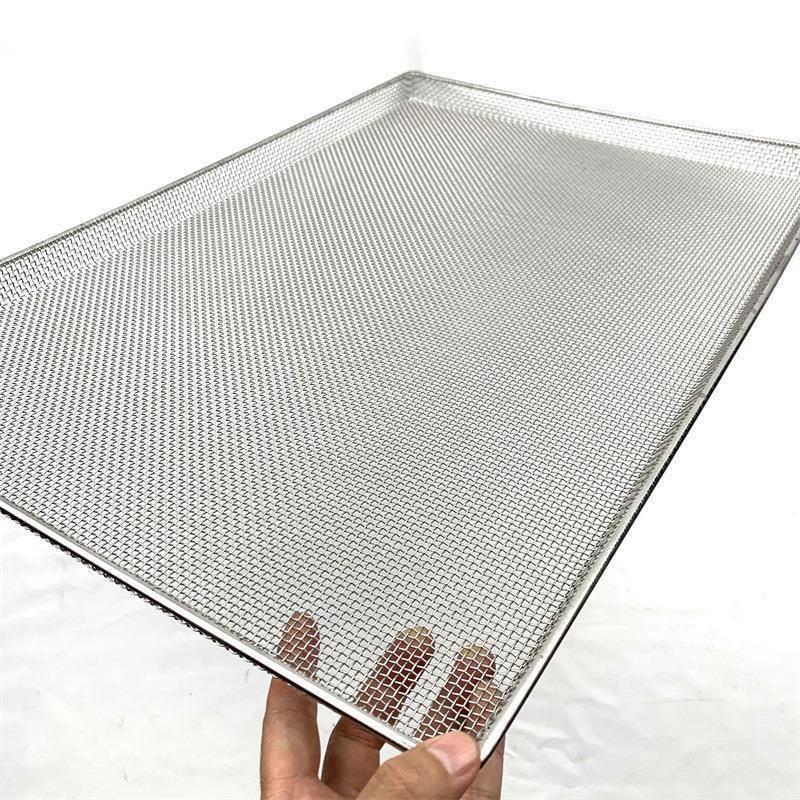
Industrial Baking Cooling Rack Trays: A Strategic Sourcing Guide for B2B Buyers
Product Introduction
In the commercial baking and food processing industry, a baking cooling rack tray is far more than a simple holding device. It is a critical component in the post-baking cooling process, directly influencing product quality, shelf life, and production throughput. These trays are engineered to support hot baked goods—from artisan breads and pastries to industrial sandwich loaves—while allowing uniform air circulation to bring core temperatures down rapidly and evenly. For B2B buyers, sourcing the right cooling tray is a strategic decision that impacts hygiene standards, line efficiency, and long-term operational costs. Unlike consumer-grade racks, industrial cooling trays must withstand continuous use, frequent washdowns, and heavy loads without deformation. They are typically constructed from stainless steel or aluminum and are designed to integrate seamlessly with automated cooling systems, rack ovens, and conveyor lines. A poorly specified tray can lead to uneven cooling, product waste, or contamination risks, making the procurement process a matter of production reliability rather than mere accessory purchasing.
Product Features and Engineering Advantages
Industrial baking cooling rack trays are engineered for performance under demanding conditions. The structural design often incorporates reinforced frames and cross-bracing to maintain flatness and prevent sagging when loaded with heavy dough pieces or continuous product flow. The mesh or perforated surface is precisely engineered to optimize airflow while providing adequate support for delicate items. Manufacturing processes such as spot welding, robotic MIG welding, and progressive die stamping ensure consistent quality and repeatability across high-volume production runs. These trays are also designed for stackability and compatibility with standard rack systems, allowing efficient use of vertical space in cooling areas. In terms of industrial environment adaptability, the trays undergo surface treatments like passivation or electropolishing to enhance corrosion resistance and facilitate cleaning. The key advantages for B2B buyers include:
- High corrosion resistance for food-contact and washdown environments
- Easy cleaning surface to meet HACCP and hygiene regulations
- Stable load capacity to prevent product damage and line stoppages
- Custom manufacturing options to fit specific rack dimensions and automation interfaces
These features translate into reduced downtime, lower replacement frequency, and consistent product quality—all critical for high-volume operations.
Application Scenarios
The versatility of baking cooling rack trays makes them indispensable across multiple industries. In food processing, they are used for cooling baked goods, confectionery, and ready meals, where rapid temperature reduction is essential for food safety. Bakeries rely on these trays to cool bread, rolls, and pastries before packaging, ensuring crust integrity and preventing condensation. Industrial manufacturing settings use similar trays for drying and cooling metal parts or components after coating or heat treatment. In pharmaceutical and laboratory environments, stainless steel trays are used for drying glassware or cooling samples, where contamination control is paramount. Commercial production of chocolate, snacks, and pet food also utilizes these trays for cooling and enrobing processes. Storage and transportation applications benefit from the trays' stackability and durability, allowing safe movement of products between production stages. In each scenario, the choice of tray material, mesh size, and load rating is dictated by the specific process requirements, such as airflow needs, product weight, and cleaning protocols.
Material Options and Manufacturing Details
Material selection is a critical decision that affects performance, lifespan, and cost. 304 stainless steel is the workhorse for food-contact applications, offering reliable corrosion resistance against most foods and cleaning agents, making it suitable for bakeries and general food processing. 316 stainless steel provides enhanced resistance to chlorides and aggressive environments, making it ideal for pharmaceutical, laboratory, and coastal food processing facilities. 201 stainless steel is a cost-effective alternative for dry or less corrosive environments, often used in non-food industrial drying applications. Aluminum trays are lightweight and offer excellent thermal conductivity, making them suitable for cooling processes where weight is a concern, though they may require protective coatings for certain food applications. Manufacturing details such as wire diameter, mesh opening, and frame thickness are tailored to the load and airflow requirements. Surface treatments like electropolishing improve cleanability and reflectivity, while passivation enhances the natural corrosion resistance of stainless steel. Buyers should consider the specific cleaning chemicals and operating temperatures when selecting the material grade to ensure long-term reliability.
Specifications and Technical Parameters
When specifying baking cooling rack trays, procurement teams should define a range of technical parameters. Dimensions must match existing rack systems and oven loaders, with common sizes like 600x400mm, 800x600mm, or custom sizes based on equipment. Wire diameter typically ranges from 2mm to 6mm, affecting load capacity and airflow. Mesh opening can vary from 10x10mm to 50x50mm, depending on product size and airflow requirements. Load capacity is often expressed in kg per tray or per rack, with industrial trays designed to handle 10-50kg or more. Number of layers and tray compatibility with standard rack heights (e.g., 20 or 40 tray positions) should be confirmed. Surface treatment options include pickling, passivation, or electropolishing. Production tolerances for flatness and dimensions are critical for automation, typically within ±1mm. Buyers should request detailed drawings and samples to verify fit and performance before committing to bulk orders.
Custom OEM Manufacturing Service
For B2B buyers with unique production requirements, a reliable OEM manufacturer can provide tailored solutions. Custom capabilities include custom sizes and designs to fit specific rack dimensions or conveyor systems, logo marking for brand identification, and special packaging for export or automated handling. Material selection can be optimized based on the operating environment and budget. Prototype development allows buyers to test designs before committing to tooling and bulk production. Bulk production runs are managed with strict quality control and delivery schedules. For custom requirements, please contact our team to discuss your project and receive a technical proposal.
Purchasing Guide for Industrial Buyers
Effective procurement of baking cooling rack trays requires a systematic approach. First, confirm the working environment: will the trays be exposed to high humidity, aggressive cleaning chemicals, or high temperatures? This determines the material grade and surface treatment. Next, check material requirements against food safety regulations and internal standards. Verify equipment compatibility by obtaining drawings of existing racks and ovens, and ensure the tray dimensions and load capacity match. Evaluate supplier production capacity through audits or references, focusing on welding quality, flatness control, and surface finish. For bulk purchases, consider the following checklist:
- Confirm working environment and cleaning protocols
- Check material certificates and food-contact approvals
- Verify tray dimensions and load ratings against equipment
- Evaluate supplier quality control and production capacity
- Review packaging and delivery reliability for export orders
Additionally, request pre-production samples to validate design and quality. A supplier with robust export experience and clear communication channels will help mitigate risks and ensure a smooth procurement process.
Frequently Asked Questions (FAQ)
Q1: What stainless steel grade is recommended for food processing applications?
For most food processing applications, 304 stainless steel is recommended due to its reliable corrosion resistance and compliance with food-contact regulations. For environments with chlorides or more aggressive cleaning agents, 316 stainless steel offers superior performance. 201 stainless steel may be suitable for dry, non-corrosive environments but is generally not recommended for direct food contact or wet cleaning.
Q2: Can the tray size be customized?
Yes, we provide custom manufacturing services. Trays can be produced to any size to match your rack system, oven, or conveyor dimensions. Simply provide detailed drawings or samples, and our engineering team will develop a proposal with specifications and pricing.
Q3: Do you provide OEM manufacturing service?
Absolutely. We offer full OEM services including custom design, logo marking, special packaging, and material selection. Our team works closely with you from prototype development through bulk production to ensure the final product meets your requirements and brand standards.
Q4: What information should buyers provide before quotation?
To provide an accurate quotation, we need the following: tray dimensions (length, width, height), wire diameter and mesh opening, material grade, surface treatment, load capacity, quantity, and any special requirements such as logo or packaging. Drawings or samples are highly appreciated for custom designs.
Q5: How do you control product quality?
We implement strict quality control at every stage: incoming material inspection, in-process checks during welding and forming, and final inspection for dimensions, flatness, surface finish, and load testing. We can provide material certificates and inspection reports, and welcome third-party audits.
Q6: What is the typical lead time for bulk orders?
Lead time depends on order quantity and customization level. For standard trays, it is typically 3-4 weeks after order confirmation. For custom designs requiring new tooling, it may take 6-8 weeks. We will provide a detailed schedule upon order placement.
Q7: Can you provide samples for evaluation?
Yes, we can provide samples for quality and fit evaluation. For standard items, samples may be available at a nominal cost. For custom designs, a prototype development fee applies, which can be credited toward bulk orders.
Q8: What are the packaging options for export?
We offer various packaging options including standard export cartons, wooden crates, and palletized loads. Trays can be individually wrapped or stacked with protective separators to prevent scratching. Custom packaging with your logo or handling instructions is also available.

