


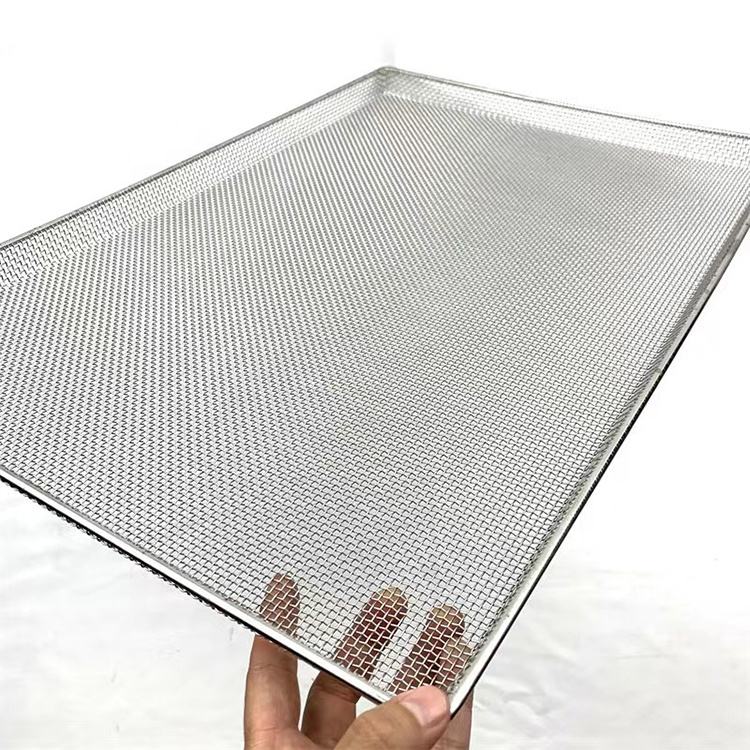
Drying Commercial Tray: A Procurement Guide for Industrial Buyers
Product Introduction
In industrial drying operations, the drying commercial tray is not a peripheral accessory—it is a critical component that directly affects product quality, throughput, and operational safety. These trays are engineered to hold, transport, and support materials through drying, cooling, and processing stages in continuous production environments where hygiene, load stability, and long-term reliability are non-negotiable.
From a manufacturer's perspective, a drying commercial tray is designed for repeated exposure to heat, moisture, and mechanical handling. Unlike consumer-grade trays, industrial trays must maintain structural integrity under heavy loads, resist corrosion from cleaning chemicals, and remain compatible with automated handling systems. For procurement teams, the challenge is not simply finding a tray—it is finding a manufacturing partner who understands the specific demands of your production line and can deliver consistent quality at scale.
When evaluating suppliers, buyers should look beyond the unit price. The total cost of ownership includes replacement frequency, downtime caused by tray failure, and compatibility with existing equipment. A tray that costs slightly more but lasts three times longer is almost always the better investment.
Product Features and Engineering Advantages
The engineering behind a drying commercial tray determines its performance in real-world conditions. Key features include:
- Reinforced frame construction: The frame is typically formed from heavier-gauge stainless steel and welded at stress points to prevent deformation during repeated loading and unloading. This is especially important in automated lines where trays are lifted and moved mechanically.
- Precision mesh or perforated surface: The surface pattern is designed to allow optimal airflow while supporting the product. Mesh openings are calculated based on the material being dried—too open and small parts fall through; too closed and airflow is restricted.
- Corrosion-resistant materials: Depending on the application, trays are manufactured from 304 or 316 stainless steel, with welds passivated to prevent rust at joint areas.
- Stackability and compatibility: Trays are designed to stack securely or interface with racking systems, minimizing storage space and facilitating integration with existing drying equipment.
- Edge treatment: Rolled or hemmed edges protect operators from sharp corners and add rigidity to the tray structure.
These features are not marketing points—they are engineering solutions to specific production problems. For example, a bakery producing thousands of bread rolls per shift needs trays that can withstand repeated entry into a 250°C oven without warping. A pharmaceutical manufacturer requires trays that can be sterilized repeatedly without surface degradation. The right manufacturer will ask about your process conditions before recommending a specification.
Application Scenarios
Drying commercial trays are used across a wide range of industries, each with distinct requirements:
Food Processing: Trays are used for drying fruits, vegetables, meat products, and snacks. Stainless steel construction ensures compliance with food safety regulations, and mesh surfaces allow uniform airflow for consistent moisture removal. Easy cleaning between batches is essential to prevent cross-contamination.
Bakery and Confectionery: Trays hold dough pieces, pastries, and baked goods through proofing, baking, and cooling stages. The trays must withstand high temperatures and frequent handling without bending or losing shape.
Industrial Manufacturing: Components are placed on trays for drying after washing, coating, or painting. The trays must resist solvents and chemicals used in these processes while maintaining dimensional stability.
Pharmaceutical and Laboratory: Trays are used in drying ovens, incubators, and sterilization processes. Material traceability and surface finish are critical, and trays are often custom-designed to fit specific equipment.
Storage and Transportation: Trays serve as intermediate containers for moving products between production stages. Stackability and weight capacity are key considerations.
In each scenario, the procurement decision should be driven by the operating environment, not by a generic product description. A tray that performs well in a bakery may fail in a chemical washing line.
Material Options and Manufacturing Details
Material selection is one of the most important decisions in specifying a drying commercial tray. Common options include:
304 Stainless Steel: The standard choice for food contact applications. It offers reliable corrosion resistance in daily cleaning environments and is suitable for most bakery, food processing, and general industrial drying applications. It is cost-effective and widely available.
316 Stainless Steel: Recommended for applications involving chlorides, saline environments, or aggressive cleaning chemicals. Pharmaceutical and chemical processing operations often specify 316 for its superior corrosion resistance. The cost is higher, but the extended service life justifies the investment in harsh environments.
201 Stainless Steel: A lower-cost alternative with adequate corrosion resistance for dry environments and light-duty applications. It is not recommended for frequent wet cleaning or exposure to corrosive substances.
Aluminum: Lightweight and conductive, aluminum trays are used in some baking applications where heat transfer is important. However, they are not suitable for highly acidic or alkaline environments and require careful handling to avoid denting.
Manufacturing details also matter. Look for manufacturers who control welding quality, surface finish, and dimensional tolerance in-house. A tray that is 2mm out of square may not fit your racking system—a problem that only becomes apparent after delivery.
Specifications and Technical Parameters
When requesting a quotation, buyers should provide as much specification detail as possible. Key parameters include:
- Dimensions: Length, width, and height, including tolerance. Available sizes can be customized according to equipment dimensions and production requirements.
- Material grade and thickness: Specify the stainless steel grade and sheet thickness. Typical thickness ranges from 0.8mm to 2.0mm depending on load requirements.
- Mesh or perforation details: Opening size and wire diameter for mesh trays, or hole diameter and pitch for perforated trays.
- Load capacity: The maximum distributed load the tray must support in your application.
- Surface treatment: Polished, passivated, or as-welded finish.
- Stacking or racking compatibility: How the tray interfaces with your existing equipment.
If you are unsure about the exact specifications, a reputable manufacturer can work with you to develop a specification based on your process requirements and equipment constraints.
Custom OEM Manufacturing Service
Off-the-shelf trays rarely fit perfectly into an existing production line. Custom OEM manufacturing allows buyers to specify trays that integrate seamlessly with their equipment and processes. Services typically include:
- Custom size and design: Trays manufactured to your exact dimensions, including non-standard shapes and edge profiles.
- Material selection: Assistance in choosing the appropriate stainless steel grade for your operating environment.
- Logo marking: Company logos or part numbers etched or stamped onto trays for identification and inventory control.
- Special packaging: Packaging designed to protect trays during shipping and simplify receiving and handling.
- Prototype development: Sample trays produced for testing and approval before bulk production.
- Bulk production: Consistent manufacturing quality across large order quantities, with documented inspection at key stages.
For custom requirements, please contact our team with your specifications and drawings. Early involvement of the manufacturer in the design process can prevent costly mistakes and ensure the final product meets both functional and budgetary requirements.
Purchasing Guide for Industrial Buyers
Industrial buyers should approach tray procurement systematically. Consider the following checklist:
- Confirm the working environment: Temperature range, humidity, chemical exposure, and cleaning methods all influence material and design choices.
- Check material requirements: Verify that the proposed material meets your industry's hygiene and corrosion standards.
- Verify equipment compatibility: Confirm dimensions, load capacity, and stackability with your production or engineering team.
- Evaluate supplier production capacity: Ask about monthly output, lead times, and experience with comparable projects.
- Review quality control processes: Request information on incoming material inspection, in-process checks, and final inspection procedures.
- Confirm packaging and delivery terms: Clarify packaging standards, shipping documentation, and delivery schedules.
When comparing suppliers, request samples or references from similar customers. A supplier with experience in your industry is more likely to understand your requirements and avoid common pitfalls.
FAQ
Q1: What stainless steel grade is recommended for food processing applications?
For most food processing applications, 304 stainless steel provides reliable corrosion resistance and is compliant with food contact regulations. If your process involves chlorides, saline solutions, or aggressive cleaning chemicals, 316 stainless steel is recommended for its superior resistance.
Q2: Can the tray size be customized?
Yes. Most industrial tray manufacturers offer custom sizing based on your equipment dimensions and production requirements. Provide drawings or detailed measurements for an accurate quotation.
Q3: Do you provide OEM manufacturing service?
Yes. OEM services typically include custom design, material selection, logo marking, and special packaging. Prototypes can be developed for approval before bulk production.
Q4: What information should buyers provide before quotation?
Provide tray dimensions, material grade, thickness, load requirements, surface finish, quantity, and any equipment compatibility details. If available, include drawings or samples of the existing tray.
Q5: How do you control product quality?
Quality control includes incoming material inspection, dimensional checks during production, weld inspection, surface finish verification, and final inspection before packing. Documentation can be provided upon request.
Q6: What is the typical lead time for bulk orders?
Lead time depends on order quantity and customization requirements. Standard production typically takes 4-6 weeks after sample approval, but confirm with your supplier based on your specific project.

