


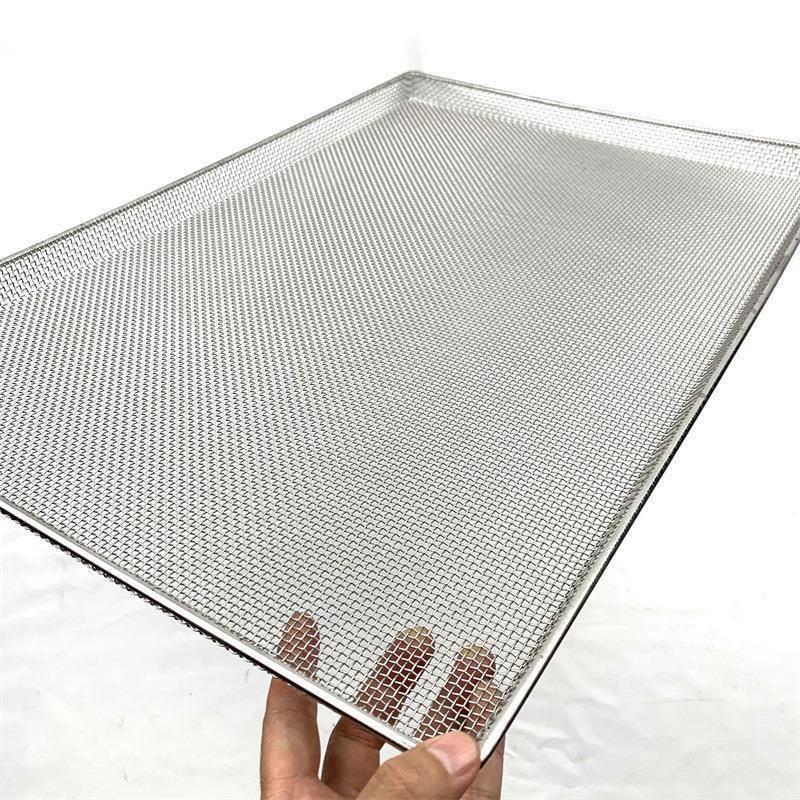
Commercial Stainless Steel Tray Sourcing Guide for Industrial Buyers
Product Introduction
In industrial procurement, a commercial stainless steel tray is rarely just a flat surface. It is a critical component in continuous production environments where hygiene, load stability, and long-term operational reliability directly affect line efficiency and product safety. This tray is engineered for repeated handling, chemical exposure, and mechanical stress—conditions that quickly degrade consumer-grade alternatives. For importers, distributors, and industrial buyers, specifying the right tray means fewer replacements, lower downtime, and compliance with food-contact and pharmaceutical standards.
From a manufacturer's perspective, the commercial stainless steel tray solves three core production problems: material contamination during drying and cooling, unstable loads during automated transportation, and premature corrosion in wash-down areas. Unlike generic trays, industrial-grade models are designed with reinforced frames, precise mesh openings, and surface treatments that withstand daily sanitation cycles. When sourcing for OEM or private-label programs, buyers need a supplier who understands these operational demands—not just a catalog of sizes.
Product Features and Engineering Advantages
The engineering behind a reliable industrial tray is not visible at first glance. The reinforced frame design improves load stability during repeated transportation and high-frequency industrial handling, reducing deflection and potential product spillage. Mesh openings are formed with precision welding or interlocking construction, preventing wire displacement under heavy loads. Surface treatment—typically passivation or electropolishing—removes weld scale and enhances corrosion resistance, which is essential for food processing and cleanroom applications.
- High corrosion resistance for wash-down and chemical environments
- Easy cleaning surface with minimal crevices to harbor bacteria
- Stable load capacity verified through structural testing
- Custom manufacturing options for non-standard equipment interfaces
- Stackable and nestable designs to optimize storage and return logistics
These advantages translate into tangible procurement value: fewer rejected batches, longer replacement cycles, and compatibility with automated handling systems. For buyers, the key is to verify that the manufacturer applies consistent tolerances and material traceability—not just claims of durability.
Application Scenarios
Industrial trays are specified by application, not by generic category. In food processing, stainless steel trays are used for blanching, cooling, and freezing because they resist acidic juices and support rapid sanitation. Bakeries rely on mesh trays for even airflow during proofing and baking, where consistent mesh openings prevent uneven browning. In pharmaceutical production, trays must meet strict cleanliness standards and avoid particle shedding—electropolished 316 stainless steel is common here.
Manufacturing plants use heavy-duty trays for parts washing, degreasing, and drying, where chemical resistance and load capacity are paramount. Warehousing and transportation applications require stackable trays that maintain rigidity under forklift handling. Laboratories use smaller custom trays for sample processing and autoclaving. Across all scenarios, the common requirement is repeatable performance: the tray must perform identically on day one and day five hundred. Buyers should match material grade and surface finish to the specific cleaning agents and operating temperatures in their facility.
Material Options and Manufacturing Details
Material selection is a cost-versus-performance decision that buyers must make with full awareness of the operating environment. 304 stainless steel provides reliable corrosion resistance for food contact applications and daily industrial cleaning environments, making it the default choice for most food processing and bakery trays. 316 stainless steel offers superior resistance to chlorides and aggressive chemicals, and is recommended for pharmaceutical, laboratory, and coastal or high-humidity installations. 201 stainless steel is a lower-cost alternative with adequate corrosion resistance for dry storage and light-duty manufacturing, but it is not suitable for frequent wash-down or acidic exposure. Aluminum trays are lightweight and offer good thermal conductivity for baking, but require protective coatings and are not recommended for caustic cleaning environments.
From a manufacturing standpoint, the production process—stamping, welding, laser cutting, and surface finishing—determines final tolerances and finish quality. Buyers should request material certificates and surface finish samples before approving bulk production. The cost difference between 304 and 316 is significant, so specify based on actual cleaning chemistry, not on worst-case assumptions.
Specifications and Technical Parameters
Industrial buyers should confirm the following parameters before requesting a quotation: overall dimensions (length × width × height), material thickness (commonly 0.8 mm to 2.0 mm for mesh trays), mesh opening size, wire diameter, load capacity per tray, stackability, and surface treatment. Available sizes can be customized according to equipment dimensions and production requirements. Production tolerances typically range within ±1 mm for overall dimensions, but buyers should confirm critical interface dimensions with the manufacturer. For automated lines, tray compatibility with existing racking and conveyor systems must be verified through drawings or prototypes. Surface finish options include pickled, passivated, and electropolished, each affecting cleanability and cost.
Custom OEM Manufacturing Service
For buyers seeking a long-term supply partner, OEM capability is a decisive factor. A qualified manufacturer should offer custom size and design development, logo marking, special packaging for export, material selection guidance, prototype development, and stable bulk production. Prototyping is particularly important for automated handling interfaces, where a few millimeters of deviation can cause jams. Buyers should request a pre-production sample and approve it against a written specification before committing to volume. For custom requirements, please contact our team to discuss drawings, target quantities, and delivery schedules.
Purchasing Guide for Industrial Buyers
Effective sourcing starts with a clear specification. Confirm the working environment first—cleaning chemicals, temperature range, and load type—then select material and surface finish accordingly. Verify equipment compatibility using drawings, and request tolerance data. Evaluate supplier production capacity through factory audits or video reviews, and check export experience with references in your region.
- Confirm working environment (chemicals, temperature, wash-down frequency)
- Check material requirements against actual operating conditions
- Verify equipment compatibility with drawings and samples
- Evaluate supplier production capacity and quality control processes
- Review packaging and delivery reliability for bulk orders
Batch procurement should include incoming inspection criteria, packaging standards for sea freight, and a clear replacement policy for non-conforming units. Reliable suppliers provide material certificates and inspection reports with each shipment.
Frequently Asked Questions
What stainless steel grade is recommended for food processing applications?
304 stainless steel is the standard recommendation for most food processing trays due to its corrosion resistance and food-contact compliance. For applications involving chlorinated cleaning agents or acidic products, 316 stainless steel is preferred. Buyers should confirm the cleaning chemistry with their sanitation team before finalizing the grade.
Can the tray size be customized?
Yes, custom sizes are standard for industrial tray manufacturing. Buyers should provide equipment dimensions, interface details, and load requirements. A manufacturer with OEM experience will produce drawings for approval and offer prototypes before bulk production.
Do you provide OEM manufacturing service?
We provide full OEM service including custom design, logo marking, special packaging, and material selection. Prototype development is available for new projects. Contact our team with drawings and target quantities to receive a tailored quotation.
What information should buyers provide before quotation?
Buyers should provide dimensions, material grade, surface finish, load capacity, quantity, and any equipment compatibility requirements. Drawings or samples of existing trays are helpful. This information allows the manufacturer to quote accurately and avoid production delays.
How do you control product quality?
Quality control includes incoming material inspection, in-process dimensional checks, weld strength testing, and final surface inspection. Material certificates and inspection reports are provided with shipments. Buyers are welcome to arrange third-party inspection before dispatch.
What is the typical lead time for bulk orders?
Lead time depends on customization and quantity. Standard trays typically ship within 4–6 weeks after sample approval, while custom OEM projects may require 6–8 weeks. Buyers should confirm production schedules early, especially for seasonal demand peaks.

