


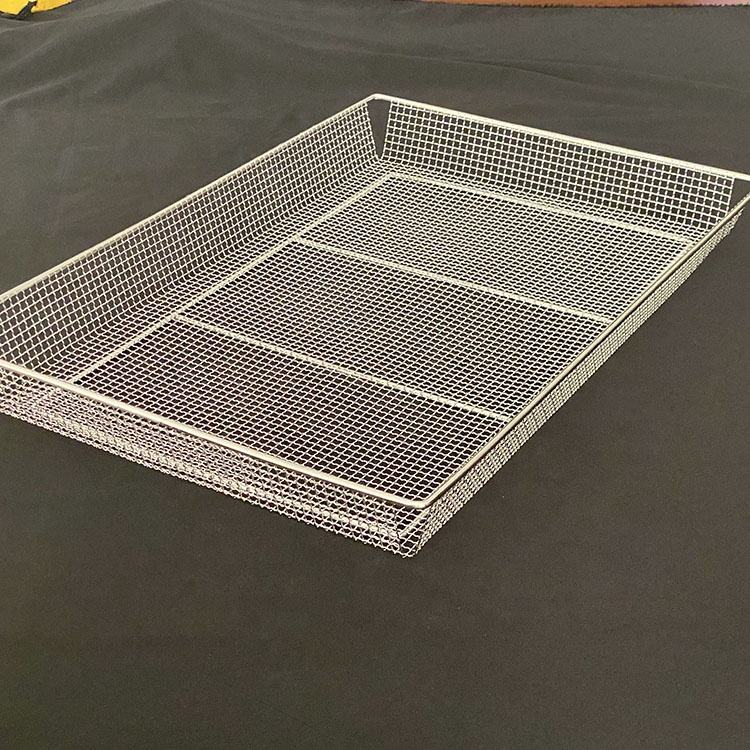
Baking Cooling Rack Tray: A Comprehensive Guide for Industrial Buyers
Product Introduction
In the industrial baking and food processing sectors, the baking cooling rack tray is not merely an accessory but a critical component that directly impacts production efficiency, product quality, and operational safety. Designed specifically for continuous production environments, these trays are engineered to facilitate rapid and uniform cooling of baked goods, confectioneries, and other processed foods after they exit the oven. Unlike consumer-grade racks, industrial cooling trays must withstand high temperatures, frequent handling, and rigorous cleaning protocols while maintaining structural integrity and hygiene standards.
For B2B buyers, selecting the right baking cooling rack tray is a strategic decision. It involves evaluating factors such as material compatibility with food contact, load-bearing capacity, airflow design for even cooling, and compatibility with existing conveyor systems or storage racks. A well-chosen tray can reduce cooling times, minimize product waste due to uneven cooling, and extend the overall lifespan of the equipment, thereby lowering total cost of ownership. This article aims to provide procurement professionals with a comprehensive understanding of industrial cooling trays, from engineering features to sourcing strategies, enabling informed purchasing decisions.
Product Features and Engineering Advantages
Industrial baking cooling rack trays are distinguished by their robust construction and thoughtful engineering. Key features include:
- Reinforced frame design: The frame is typically constructed from heavier gauge stainless steel and may include cross-bracing or edge reinforcements to prevent deformation under heavy loads and repeated use.
- Optimal mesh pattern: The mesh or perforation pattern is carefully designed to allow maximum airflow while supporting delicate products. Wire diameter and mesh opening are balanced to ensure structural strength without compromising cooling efficiency.
- High corrosion resistance: Made from food-grade stainless steel (e.g., 304 or 316), these trays resist corrosion from moisture, cleaning agents, and food acids, ensuring longevity and hygiene.
- Easy cleaning surface: Smooth welds and electropolished surfaces prevent food particle accumulation, making sanitation faster and more effective.
- Stable load capacity: Engineered to support uniform loads across the entire surface, reducing sagging and product damage during transport.
- Custom manufacturing options: Trays can be tailored in size, mesh configuration, and load ratings to fit specific production lines and cooling systems.
These features translate into tangible benefits: reduced downtime due to tray failures, consistent product quality, and compliance with food safety regulations. For instance, the reinforced frame design ensures that trays can be stacked or moved through automated systems without bending, which is crucial in high-volume bakeries. Additionally, the use of stainless steel drying trays with optimized airflow can cut cooling times by up to 20%, significantly boosting throughput.
Application Scenarios
Baking cooling rack trays find extensive use across various industries:
- Food Processing: Used for cooling baked goods, fried items, and processed meats. The trays facilitate rapid heat dissipation, preventing condensation and spoilage.
- Bakery: Essential for cooling bread, pastries, and cakes after baking. The open mesh design allows steam to escape, maintaining crust texture.
- Industrial Manufacturing: Employed in drying processes for components, such as after washing or coating, where uniform airflow is critical.
- Pharmaceutical: Used in drying and cooling of granules, tablets, and other pharmaceutical products where hygiene and precise temperature control are paramount.
- Laboratory: For drying glassware, samples, and equipment, where chemical resistance and cleanliness are required.
- Commercial Production: In large-scale food service and catering operations for cooling and storage of food items.
Each application leverages the tray's core strengths: durability, hygiene, and efficient airflow. For example, in a commercial drying rack system within a bakery, the trays are often stacked on mobile racks that move through proving and cooling zones. The trays must withstand temperature fluctuations from -20°C to 250°C without warping or losing structural integrity. Similarly, in pharmaceutical drying, trays are often custom-designed with specific mesh sizes to prevent product loss while allowing optimal air circulation.
Material Options and Manufacturing Details
The material selection for baking cooling rack trays is critical and depends on the specific application requirements:
- 304 Stainless Steel: The most common choice for food contact applications due to its excellent corrosion resistance and formability. It is suitable for most bakery and food processing environments, offering a good balance of cost and performance.
- 316 Stainless Steel: Provides superior corrosion resistance, particularly against chlorides and harsh chemicals. Ideal for pharmaceutical, chemical, and marine environments where exposure to aggressive substances is a concern.
- 201 Stainless Steel: A lower-cost alternative with adequate corrosion resistance for dry environments. Often used in non-food applications or where budget constraints are significant, but not recommended for wet or acidic food contact.
- Aluminum: Lightweight and excellent thermal conductivity, making it suitable for cooling applications where weight is a concern. However, it requires protective coatings to prevent corrosion and is not as durable as stainless steel in heavy-duty settings.
Manufacturing details also impact performance. Trays are typically constructed using resistance welding or laser welding for precise mesh attachment. Edge frames are often formed through bending and welding, followed by polishing to eliminate sharp edges and facilitate cleaning. Surface treatments such as passivation or electropolishing enhance corrosion resistance and cleanliness. For custom stainless steel tray requirements, manufacturers can adjust wire diameter, mesh opening, and frame thickness to meet specific load and airflow needs.
Specifications and Technical Parameters
When specifying baking cooling rack trays, industrial buyers should consider the following parameters:
- Size: Customizable to fit existing racks, ovens, and conveyor systems. Common sizes range from 400x600 mm to 800x1000 mm, but can be tailored.
- Thickness: Frame thickness typically ranges from 1.0 mm to 2.0 mm, depending on load requirements.
- Capacity: Load capacity varies with design; standard trays can support 10-50 kg evenly distributed.
- Weight Loading: Must be specified to ensure trays do not deform under expected loads.
- Layers: Trays can be designed for single or multiple layers, with stacking features for space efficiency.
- Mesh Opening: Typically 5x5 mm to 20x20 mm, chosen based on product size and airflow needs.
- Wire Diameter: Ranges from 1.0 mm to 4.0 mm, affecting strength and openness.
- Tray Compatibility: Must match existing rack systems; custom designs can be provided.
- Surface Treatment: Electropolished or passivated for enhanced corrosion resistance and cleanability.
- Production Tolerance: Typically ±1 mm for dimensions, ensuring fit and interchangeability.
Buyers should confirm these specifications with suppliers to avoid compatibility issues and ensure optimal performance.
Custom OEM Manufacturing Service
For unique production requirements, many manufacturers offer OEM stainless steel tray services. This includes:
- Custom size and design: Tailored to fit specific equipment or process flows.
- Logo marking: Brand identification for inventory management.
- Special packaging: For safe transport and storage.
- Material selection: Assistance in choosing the right grade for the application.
- Prototype development: Rapid prototyping to test fit and function before mass production.
- Bulk production: Scalable manufacturing with consistent quality control.
For custom requirements, please contact our team to discuss your specifications and receive a tailored quotation.
Purchasing Guide for Industrial Buyers
Effective procurement of baking cooling rack trays requires a systematic approach. Consider the following steps and tips:
- Confirm working environment: Identify temperature ranges, moisture levels, and chemical exposure to select appropriate material.
- Check material requirements: Ensure compliance with food safety regulations (e.g., FDA, EU 1935/2004) and industry standards.
- Verify equipment compatibility: Provide detailed drawings or samples of existing racks to ensure perfect fit.
- Evaluate supplier production capacity: Assess manufacturing capabilities, quality control processes, and lead times.
- Request prototypes: Test samples under actual production conditions before committing to bulk orders.
- Review quality control: Ask for material certificates, inspection reports, and warranty terms.
- Consider logistics: Evaluate packaging for transport damage prevention and delivery reliability.
Additionally, buyers should:
- Obtain multiple quotations to compare pricing and value-added services.
- Clarify payment terms and Incoterms.
- Visit supplier facilities or request virtual audits to verify capabilities.
- Establish a trial order to assess product quality and supplier responsiveness.
By following these guidelines, procurement professionals can secure high-quality trays that enhance operational efficiency and reduce long-term costs.
FAQ
Q1: What stainless steel grade is recommended for food processing applications?
A1: For most food processing applications, 304 stainless steel is recommended due to its excellent corrosion resistance and food safety compliance. For environments with high chloride exposure or stringent hygiene requirements, 316 stainless steel is preferred. Both grades meet FDA and EU regulations for food contact.
Q2: Can the tray size be customized?
A2: Yes, trays can be fully customized in size, mesh pattern, and load capacity to fit specific equipment and production needs. Provide detailed dimensions or drawings for accurate manufacturing.
Q3: Do you provide OEM manufacturing service?
A3: Absolutely. We offer OEM services including custom design, logo marking, and special packaging. Our engineering team can assist with material selection and prototype development to ensure the final product meets your requirements.
Q4: What information should buyers provide before quotation?
A4: Buyers should provide tray dimensions (length, width, height), material grade, mesh specifications, load requirements, quantity, and any special features such as stacking or branding. Application details (temperature, environment) also help in recommending the optimal solution.
Q5: How do you control product quality?
A5: We implement strict quality control at every stage: incoming material inspection, in-process checks during welding and forming, and final inspection for dimensions, surface finish, and load testing. We provide material certificates and inspection reports with each shipment.
Q6: What is the typical lead time for bulk orders?
A6: Lead time varies based on order quantity and customization. Standard trays typically ship within 4-6 weeks, while custom designs may require 6-8 weeks. We provide a detailed production schedule upon order confirmation.
Q7: Can trays be designed for automated handling systems?
A7: Yes, we can incorporate features such as reinforced edges, stacking lugs, and robot-friendly gripping points to ensure compatibility with automated conveyors and robotic pick-and-place systems.
Q8: What surface treatments are available?
A8: Common surface treatments include electropolishing, passivation, and pickling to enhance corrosion resistance and cleanliness. For aluminum trays, anodizing or coating can be applied. The choice depends on the application and hygiene requirements.

